Logistics Companies in Riyadh (2026): Warehousing, Last Mile and Fulfilment
lkwjd Editorial TeamAugust 23, 202615 min read
LE
lkwjd Editorial TeamIndependent software reviews for Middle East businesses
This article may contain affiliate links. If you purchase through these links, we may earn a commission at no extra cost to you. This helps support our independent reviews.
Key Takeaways
This is not a carrier comparison. Choosing a courier decides how a parcel travels; choosing a Riyadh 3PL decides where your stock physically sits, who touches it, and how far it has to move before it reaches a customer. The second decision constrains the first.
Nobody publishes a 3PL rate card, and you should be suspicious of anyone who quotes you a single per-order number. Real pricing splits into storage, inbound handling, pick and pack, last-mile and returns — five lines that move independently and that a vendor can shuffle to make a headline look cheap.
Riyadh warehouse space is genuinely tight. Knight Frank and JLL data reported through 2025 and early 2026 puts modern logistics stock at roughly SAR 208 to 238 per square metre per year with occupancy around 97 to 98 percent and rents rising 9 to 16 percent year on year. Those are landlord rents, not 3PL rates, but they set the floor under every quote you receive.
The Special Integrated Logistics Zone beside King Khalid International Airport — marketed as Riyadh Integrated — is the Kingdom's flagship bonded logistics zone, covering roughly 3 million square metres and offering a 50-year tax relief period, 100 percent foreign ownership and suspended customs duty until goods enter the local market. It matters if you import and re-export. It does very little for a domestic-only Saudi store.
Two-hour delivery in Riyadh is not a courier product. It is a warehousing decision — it only works if inventory is already sitting in a small forward site inside the city, which costs more per unit and only pays back on a narrow set of fast-moving SKUs.
How Riyadh Logistics Actually Works
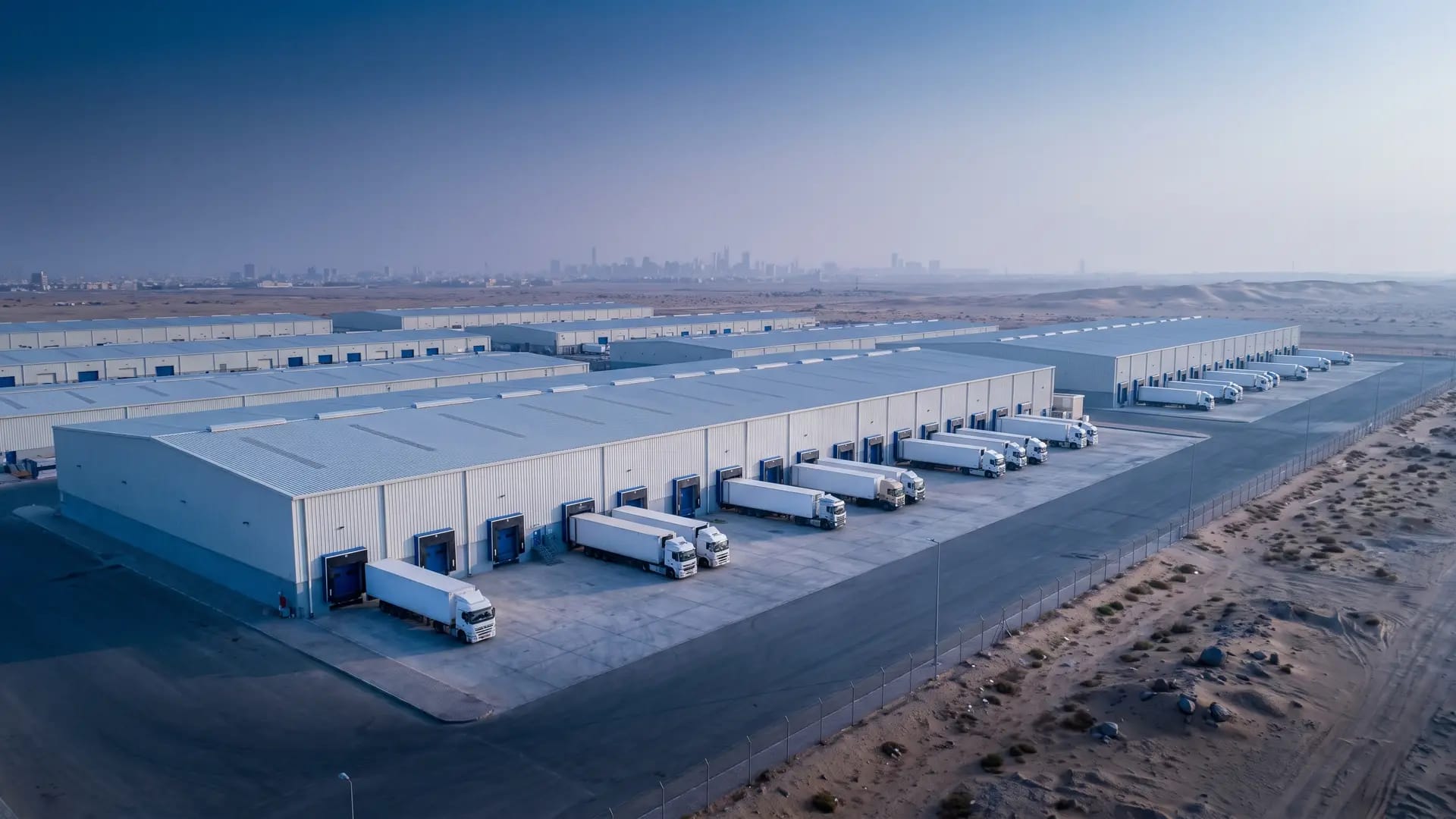
Riyadh is a city that punishes bad warehouse siting more than most. It is large, low-density, still sprawling outward, and its industrial capacity sits on the southern and eastern edges while a great deal of its buying power sits north and west. Every kilometre of that gap is paid for on every order, forever.
The useful way to think about the market is as three layers stacked on top of each other. At the bottom sits industrial real estate — the sheds themselves, in MODON's industrial cities, in private logistics parks along the highway network, and in the bonded zone beside the airport. Above that sits the 3PL layer: the companies that lease that space, staff it, run a warehouse management system inside it and sell you a slot in it. On top sits the last-mile layer, the couriers and fleets that move the parcel the final distance. Most published comparisons collapse all three into one list, which is why they are so hard to act on.
3PL Market SizeUSD 13.02bn Saudi 3PL market in 2026 (analyst estimate)
Warehouse Rent~SAR 208-238 per sqm/year, modern stock (third-party data)
Bonded ZoneRiyadh Integrated SILZ, ~3m sqm beside King Khalid International Airport
Fastest PromiseTwo-hour intra-city, but only from a forward site
Mordor Intelligence sizes the Saudi third-party logistics market at about USD 13.02 billion in 2026, growing at roughly 4.91 percent a year. Treat commissioned analyst sizing the way you would treat any number nobody outside the firm can reproduce: directionally useful, not something to build a business case on. The more decision-relevant number is the property one. Knight Frank's industrial and logistics research and JLL's Saudi market commentary both describe a market running close to full — occupancy in the high nineties, double-digit rent growth, and very little modern speculative supply. When landlords hold that much leverage, 3PL providers pass it through.
That scarcity is the single biggest thing separating Riyadh from the way this decision is usually written about. In a loose warehouse market you shop 3PLs on service and switch when one disappoints. In a market at 97 percent occupancy your provider cannot magic up an extra thousand pallet positions in November because you had a good Ramadan campaign forecast wrong. Capacity has to be committed in advance, and that changes what you should be negotiating for.
Where the Warehouses Actually Are
There is no single warehouse district in Riyadh. There are four broad locations, and which one your 3PL sits in changes your cost, your cut-off times and your ability to promise same-day delivery.
The first is MODON's industrial estate — the Saudi Authority for Industrial Cities and Technology Zones runs Riyadh First, Second and Third Industrial Cities within its central sector. These are the conventional home of manufacturing, distribution and a large share of the Kingdom's ambient warehousing. The second is the private logistics park layer, of which the most visible example is Agility Logistics Parks in the Sulay industrial zone on Istanbul Road: a roughly 870,000 square metre estate, stated as less than 40 kilometres from King Khalid International Airport, which announced a SAR 250 million expansion adding 100,000 square metres of Class A warehousing to take the complex past 551,000 square metres. Sulay is where a striking amount of Riyadh's e-commerce fulfilment capacity has clustered.
The third is the bonded layer. The Special Integrated Logistics Zone next to King Khalid International Airport — commercially branded Riyadh Integrated, and adjacent to the airport expansion programme now known as King Salman International Airport — covers roughly 3 million square metres and operates as a special bonded zone: customs duties and taxes are suspended while goods sit inside it, and only fall due when the goods enter the Saudi market. Published incentives include a 50-year tax relief period, 100 percent foreign ownership, VAT and withholding exemptions, and bonded corridors linking the zone to other bonded facilities and entry points. Permitted activities run from warehousing and value-added services through light assembly, repair and re-export. Alongside it sits the Riyadh Dry Port off Exit 16 in Al Malaz, the Kingdom's largest inland customs facility, connected by Saudi Railways to the Dammam and Jubail ports.
The fourth is the cheap-land option, and it is the one most often oversold to newcomers. Sudair City for Industry and Business is a planned 258 square kilometre MODON city roughly 120 kilometres north of Riyadh, with land at MODON pricing and real rail proximity. For a manufacturer moving full truckloads, Sudair can be excellent. For a direct-to-consumer brand promising next-day delivery inside Riyadh, putting your pick face 120 kilometres from your customers is a decision you will regret every single day, and no amount of land saving recovers it.
Salasa — The Best-Capitalised Fulfilment Specialist
If you are running a Saudi e-commerce brand and you want a 3PL that was built for e-commerce rather than adapted to it, Salasa is the first name to put on the list.
Salasa was founded in 2017 by Abdulmajeed Alyemni and Hasan Alhazmi and is headquartered in Riyadh. What separates it from most of the field is capital and the direction that capital has been pointed. It raised USD 8.6 million in a Series A round led by AlSulaiman Group, then closed a USD 30 million Series B in August 2025 led by Artal Capital with participation from SVC, Wa'ed Ventures, 500 Global and AlSulaiman Group, taking total funding to somewhere near USD 40 million. That is not a rounding error in this market; it buys warehouse management software, automation and forward sites that a bootstrapped operator cannot fund.
The service line runs wider than pure fulfilment: warehousing, inventory management, shipping, bonded-zone handling, cross-border, last mile, and a dark-store-backed two-hour delivery product in the metros. Platform connectors cover Salla, Zid, Shopify, Magento and WooCommerce, which matters more than it sounds — an integration that syncs stock levels and pushes tracking back to the store without a spreadsheet is the difference between a 3PL that saves you headcount and one that just relocates it.
What we like
Purpose-built for e-commerce fulfilment rather than a freight business with a warehouse bolted on
The strongest funding position in the Saudi fulfilment field, with roughly USD 40 million raised across two rounds
Native connectors for Salla, Zid, Shopify, Magento and WooCommerce, so stock and tracking sync into the store itself
Bonded-zone and cross-border handling in the same account as domestic fulfilment, which is rare below enterprise scale
What to watch
No published pricing of any kind — everything is quoted, so budget the time to run a real tender rather than a price check
The two-hour proposition depends on your SKUs being held in a forward site; confirm which of your items actually qualify before you advertise the promise
Starlinks — Automation at Real Scale
Starlinks is the provider to look at when your problem has stopped being cost per order and started being throughput — the point where a manual pick operation simply cannot move enough units in a day.
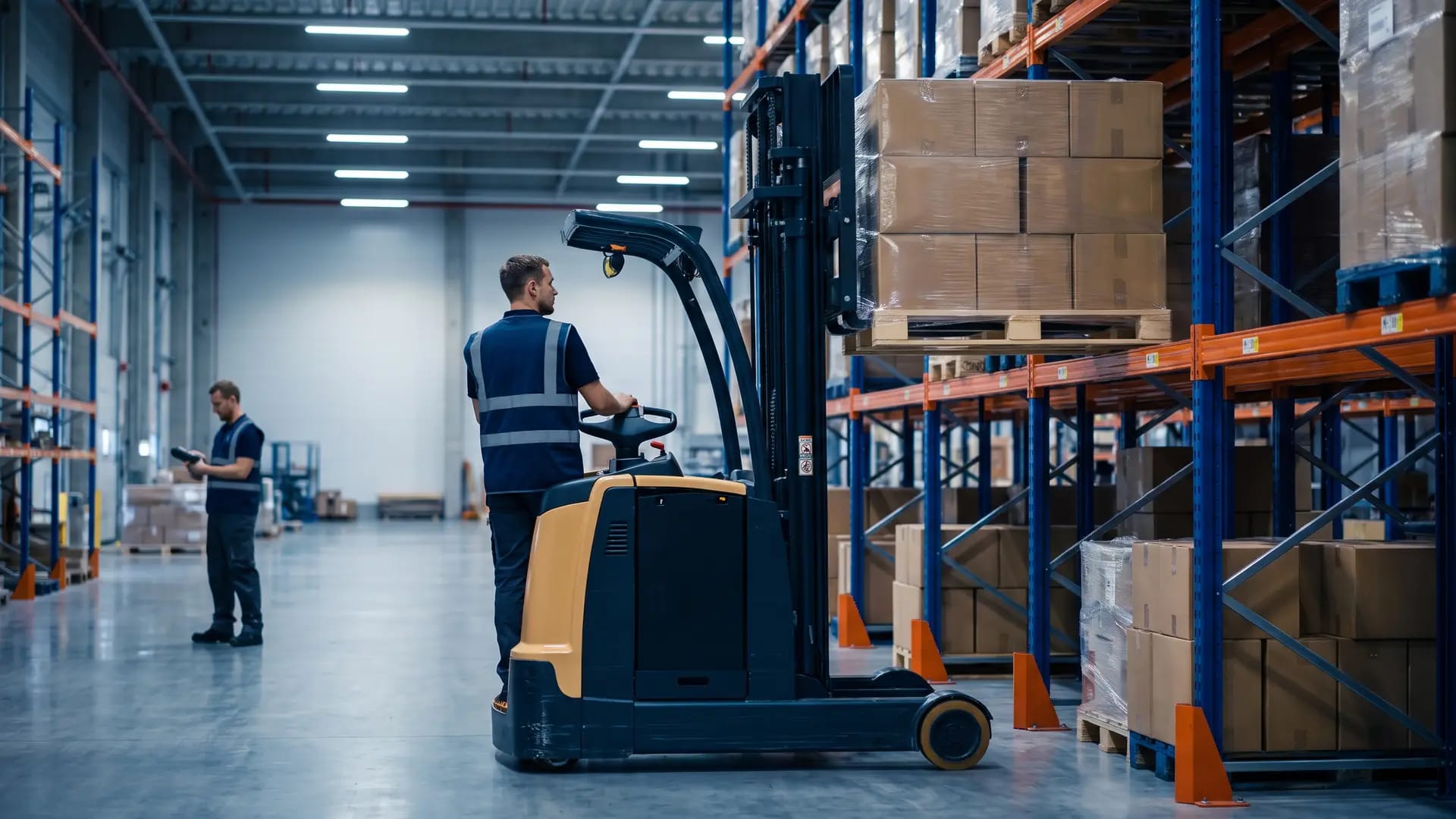
Its Riyadh flagship sits inside Agility Logistics Park in the Sulay industrial zone, with a stated storage area of around 400,000 square feet. The company reported an investment of more than USD 26.65 million — roughly SAR 100 million — in a hybrid facility built around 254 autonomous mobile robots supplied by Geek+, with stated storage capacity for over 12 million units and a target of processing an average of 3.6 million unit orders a month. The site was described at launch as taking Starlinks to 18 fulfilment centres across the Kingdom. These are vendor and press-release figures and we have not audited them, but the shape of the claim — goods-to-person robotics rather than pickers walking aisles — is verifiable on a site visit in about ten minutes.
The trade-off is the usual one with automation. Robotic goods-to-person systems are outstanding for high-volume, small-item, many-SKU picking and comparatively poor for bulky, irregular or heavily seasonal stock. Starlinks also sells across 2PL, 3PL and 4PL, last mile, automotive logistics and quick commerce, which means the account team you meet may be selling you a very different operation from the one in the brochure. Ask which building your stock will physically sit in.
What we like
Genuine automated goods-to-person picking at a scale nothing else in Riyadh's e-commerce fulfilment field currently matches
Sits inside Agility Logistics Park in Sulay, with the highway access and dock capacity of a Class A estate
A broad service book — 2PL through 4PL, last mile and quick commerce — so growth does not force a re-tender
What to watch
Automation economics reward high-volume small-item picking; bulky or irregular stock rarely justifies the setup
Capacity and throughput figures are vendor-stated and were published at launch — ask for current utilisation, not launch capacity
A very broad service portfolio means the operation you are sold and the operation you get can differ; insist on naming the specific site
The Intra-City Speed Layer
Same-day and two-hour delivery in Riyadh is where the most money is wasted, because merchants keep buying it as a shipping upgrade when it is really a stock-positioning decision.
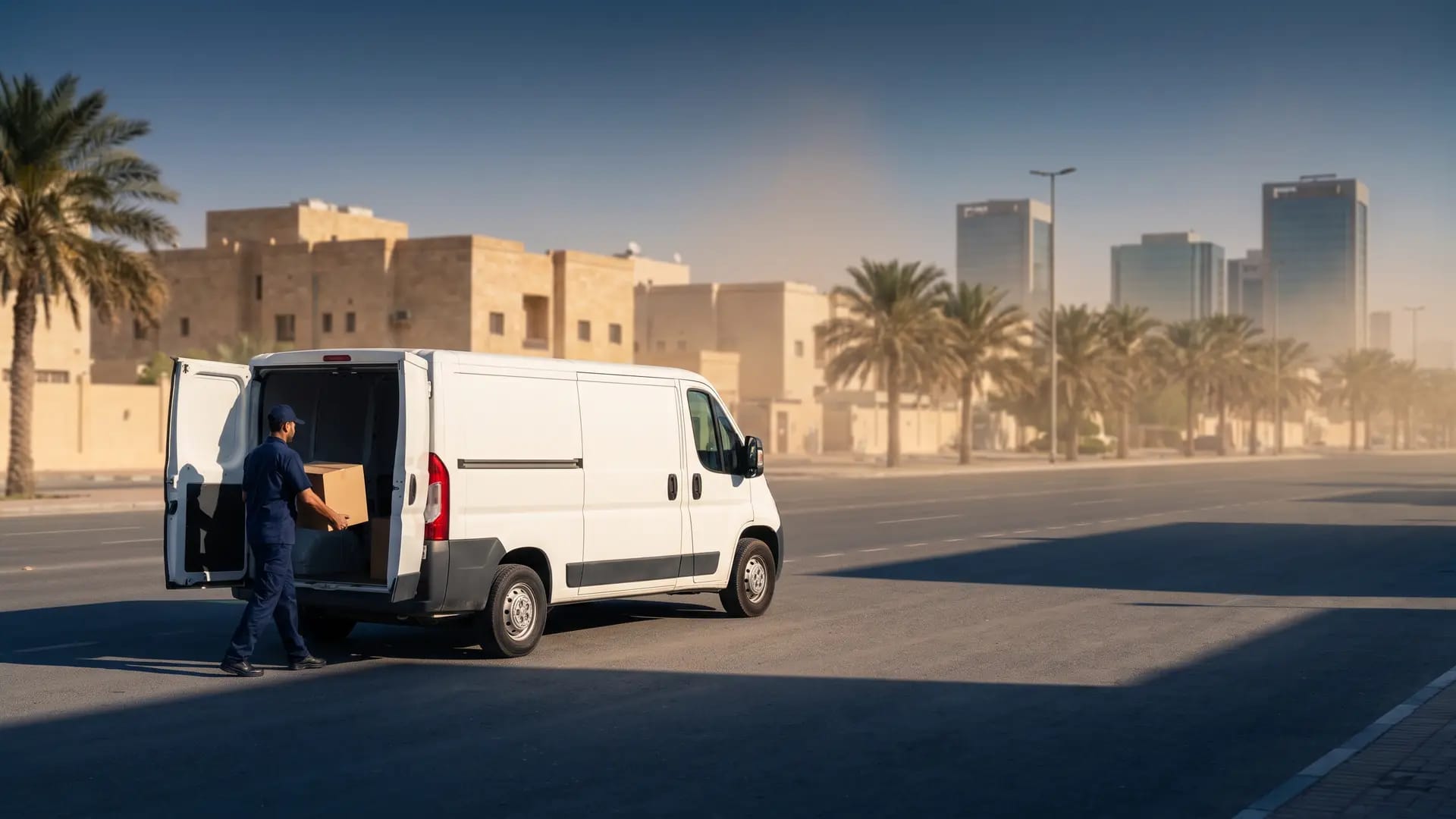
The physics are unforgiving. Riyadh is enormous and congested — TomTom's traffic index recorded around 66 hours lost to rush-hour congestion in the city across 2025, and the Riyadh Metro, which opened in December 2024 across 176 kilometres and 85 stations, moves people rather than parcels. A van leaving a single warehouse in Sulay cannot serve the north of the city inside two hours reliably, regardless of what the courier contract says. The only way the promise holds is if the item was already sitting in a small site much closer to the customer when the order landed.
That is exactly the model the specialists have built. Isnaad, founded in 2019, states it has delivered over 10 million orders in the Kingdom and runs micro-warehouses inside Riyadh neighbourhoods for fast-moving items, marketing delivery in two hours or less in the city alongside centres in Jeddah and Dammam. On the retail side, Nana has reportedly opened around 30 dark stores in Riyadh with plans for roughly 20 more, funded in part by a USD 50 million Series C reported in August 2025. Both are the same idea: shorten the distance, not the drive time.
The commercial consequence is what merchants underestimate. Forward sites mean holding the same SKU in several places, which raises total inventory, raises the risk of stranding stock in the wrong node, and raises storage cost per unit because small urban space is dearer than a big shed on the edge of town. It pays back on a narrow band of fast-moving, high-margin, repeat-purchase items. Run it across a long tail catalogue and it quietly destroys your margin while the delivery promise on your product page looks fantastic.
Shorages — Flexible Capacity Without a Lease
Not every brand needs a committed contract with a national operator. For smaller and seasonal volumes, the more interesting question is how little you can commit to and still get a competent pick and pack.
Shorages, established in 2019 and operating fulfilment centres in Dubai and Riyadh, sells on-demand storage without long-term commitments, with connectors into Shopify, Amazon, Noon, Salla, Zid and a long list of others. The GCC footprint is the interesting part: for a brand selling into both Saudi Arabia and the UAE, holding stock in both markets under one account avoids the cross-border charge on every single order. It raised a comparatively small seed round — around USD 700,000 reported in 2022 — so it is not competing on balance sheet, and you should size it accordingly.
The same flexible posture shows up locally. Providers such as Excellence for Logistics market monthly warehousing terms without annual contracts from facilities in the Al Sulay area near Exit 18. Flexibility is genuinely valuable in a market at 97 percent occupancy — but understand what you are buying. Short commitments mean you are last in the queue when capacity tightens, and shared shelf space in a multi-client site behaves differently at peak than dedicated pallet positions do.
What we like
On-demand storage with no long-term commitment, which suits seasonal or still-unproven volumes
Stock in both Riyadh and Dubai under one account, avoiding a cross-border leg on every GCC order
Broad marketplace and storefront connectors including Shopify, Amazon, Noon, Salla and Zid
What to watch
Modest funding relative to the national operators — assess balance-sheet risk before you concentrate all your stock there
Flexible terms cut both ways: in a tight market, uncommitted volume is the first thing squeezed out at peak
Six Things That Trip Up Riyadh 3PL Decisions
These are the six mistakes we see cost Saudi merchants the most money when they pick a fulfilment partner, in roughly the order they do damage.
01
Comparing a single blended per-order price
A 3PL quote has at least five moving parts — storage, inbound handling, pick and pack, last mile and returns — and a vendor can make any one of them look cheap by loading another. A low pick fee with expensive storage punishes slow-moving stock; cheap storage with a high pick fee punishes exactly the fast-moving lines you want to grow. Demand the split, then model it against your own order profile.
02
Pricing storage by pallet when you sell by the unit
Pallet-position pricing is the default in Saudi warehousing because it comes from the freight world. It is a poor fit for small-item e-commerce, where a pallet may hold hundreds of SKUs and utilisation is what actually varies. Ask whether shelf, bin or cubic-metre pricing is available, and get the conversion rule in writing so a half-empty pallet does not bill as a full one.
03
Ignoring where the building actually is
Two providers quoting the same rate are not equivalent if one sits in Sulay and the other is 120 kilometres up the road in Sudair. Location sets your dispatch cut-off, your same-day feasibility and the per-drop cost your courier will quote you. Plot your last ninety days of Riyadh deliveries on a map before you sign anything.
04
Treating returns as an afterthought
Returns are the most expensive square metre in any warehouse, because a returned item has to be received, inspected, graded, repacked and restocked or written off — all manual, all slow. Many quotes leave returns handling deliberately vague. Get a per-return price, a defined grading standard and a turnaround commitment, or plan on eating the difference.
05
Buying cold chain you cannot audit
If you handle food, supplements, cosmetics or anything pharmaceutical, temperature-controlled space is not a checkbox. The Saudi Food and Drug Authority publishes Good Distribution Practice guidance for pharmaceutical products, and non-compliance carries real consequences. Ask for the licence, the temperature-mapping report and the excursion log, not a photograph of a chiller.
06
Signing without an exit
In a market at high-nineties occupancy, leaving a 3PL is far harder than joining one, because the next provider may not have space this quarter. Negotiate the exit at the start: notice period, cost of stock retrieval, who pays for the transfer, and how quickly your inventory data can be exported in a usable format.
What a Riyadh 3PL Actually Costs
We are going to be explicit about what is and is not knowable here, because this is where most comparison articles start inventing numbers. No 3PL in Riyadh publishes a rate card. Pricing is quoted per client against your specific SKU profile, order volume, seasonality and service level, and two brands shipping identical order counts can legitimately be quoted very different prices. What follows is not a price list — it is the anatomy of the quote you will receive, and what to insist on for each line.
Cost line
Usually billed on
What moves it
Get in writing
Storage
Pallet position, shelf/bin or cubic metre, per month
Underlying warehouse rent, ambient vs temperature-controlled, dwell time
The unit of measure and the conversion rule for part-full pallets
Inbound handling
Per container, pallet or carton received
Whether goods arrive palletised, labelled and barcoded or loose
The prep standard, and the surcharge if a delivery misses it
Pick and pack
Per order plus per additional line or unit
Average lines per order, packaging spec, gift or insert requirements
The first-line price and every incremental-line price separately
Last mile
Per parcel, by weight band and destination
Whether it is the 3PL's own fleet or a courier resold at a margin
Which carrier is used, and whether you may bring your own rate
Returns
Per returned item, often plus a grading fee
Inspection depth, repack requirement, restock vs write-off rate
A defined grading standard and a turnaround commitment in days
The one number in this market that is genuinely public is the landlord's, not the 3PL's. Property research reported from Knight Frank and JLL through 2025 and into 2026 puts modern Riyadh logistics stock at roughly SAR 208 to 238 per square metre per year, with occupancy around 97 to 98 percent and rents rising somewhere between 9 and 16 percent year on year depending on the submarket and the source. Older stock is reported to start nearer SAR 100, and prime cold-chain or premium logistics-park space is quoted far higher. Those are third-party figures for leasing an empty building, not for a serviced pallet position — but they tell you why your 3PL quote is going up at renewal, and they give you a sanity check on whether a storage rate is plausible.
The second thing worth knowing is that the storage-versus-handling split is where negotiating leverage actually lives. A provider with spare space and idle labour will discount storage; one running hot will not. Ask which they are before you decide which line to push on. And be careful with any quote that bundles last mile invisibly — if the 3PL is reselling a courier at a margin, you are paying twice for a service you could contract directly, and you have lost the ability to benchmark either half.
The process that works is unglamorous. Export ninety days of orders with SKU, weight, order lines and delivery district. Send that exact file to three providers. Require each to quote every line separately against it, with peak-month assumptions stated, plus the returns rate and the exit terms. Then rebuild all three quotes in one spreadsheet using your own volumes. Roughly half the time the cheapest headline is not the cheapest total, and the exercise takes an afternoon.
The Rest of the Field
Below the specialists sits a wider field worth quoting, and one structural alternative most growing brands eventually consider. Aymakan has operated from Riyadh since 2013 and is reported to run nine e-fulfilment and storage facilities in the Kingdom. Wared Logistics opened its first Riyadh warehousing operation in December 2011 with a temperature-controlled focus for the food industry and states ambient capacity of up to 10,000 pallet positions. Beyond the 3PLs, global names including DHL Supply Chain, Almajdouie and Al-Futtaim Logistics compete for contract logistics at enterprise scale, and providers such as Excellence for Logistics sell flexible monthly terms out of Al Sulay. The table below is our editorial read of who fits which job.
Provider
Best For
Riyadh Footprint
Store Integrations
Rating
Salasa
Scaling Saudi e-commerce brands
Riyadh HQ, multi-city hubs, dark stores
Salla, Zid, Shopify, Magento, WooCommerce
4.6
Starlinks
High-volume small-item throughput
Agility Logistics Park, Sulay; robotic site
Enterprise integrations; confirm per account
4.5
Isnaad
Intra-city speed on fast-moving SKUs
Micro-warehouses inside Riyadh districts
Major Saudi storefronts; confirm your stack
4.3
Shorages
Small or seasonal volumes, GCC dual-stocking
One Riyadh centre plus Dubai
Shopify, Amazon, Noon, Salla, Zid and more
4.1
Aymakan
Storage plus delivery from one vendor
Riyadh-based since 2013; nine KSA facilities
Shopify, Salla, Zid
4.0
Wared Logistics
Food and temperature-controlled stock
Riyadh since 2011; ambient and chilled
Not an e-commerce-first platform
3.9
Aymakan
A Riyadh-headquartered logistics operator active since 2013, reported to run nine e-fulfilment and storage facilities in the Kingdom, selling storage, order preparation and delivery as one package with connectors into Shopify, Salla and Zid.
A sensible shortlist entry when you want warehousing and last mile from a single vendor and are willing to trade some pricing transparency for a shorter contract chain.
Wared Logistics
A contract logistics operator that launched its first Riyadh warehousing operation in December 2011 with a temperature-controlled focus for the food industry, and states ambient capacity of up to 10,000 pallet positions alongside its chilled and frozen space.
The right shape of provider if your stock is food or otherwise temperature-sensitive; the wrong one if you need a self-serve e-commerce fulfilment console.
Leasing your own space
The structural alternative: take space directly in a MODON industrial city, a private estate such as Agility Logistics Parks in Sulay, or the bonded Riyadh Integrated zone beside King Khalid International Airport, and run the operation yourself. Rent figures here are third-party property research, not quotes.
Rarely right below a few thousand orders a month — you take on the lease, the labour, the warehouse management system and the peak risk, and in a market at 97 percent occupancy you may not find the space at all.
Our Verdict
Our Verdict on Riyadh Logistics in 2026
There is no single best logistics company in Riyadh, and any list that names one without asking what you sell and where your customers live is not a review. What exists is a clear best answer per job — and one decision that outranks all of them: get the warehouse in the right place before you optimise anything downstream of it.
Best for e-commerce brands
Salasa4.6/5
Purpose-built for e-commerce, the strongest funding position in the field, clean Salla, Zid and Shopify connectors, and bonded plus cross-border handling in the same account.
Best for throughput
Starlinks4.5/5
Robotic goods-to-person picking inside a Class A estate in Sulay. The right answer when your constraint is units per hour rather than cost per order.
Best for intra-city speed
Isnaad4.3/5
Micro-warehouses inside Riyadh districts are the only structure that makes a two-hour promise physically honest. Apply it to your fastest lines, not your catalogue.
Best structure for most brands
One 3PL, unbundled last mile4.4/5
Contract storage and fulfilment with one provider, but keep your own courier accounts. You preserve the ability to benchmark both halves and to route around a service failure in either.
One closing caution, in the spirit of the rest of this piece. Every capacity, throughput and facility-count figure quoted publicly about this market — including the ones we have reproduced here with their provenance attached — comes from vendor statements, press releases or paid analyst research. None of it is audited. The rent figures are third-party property data for empty buildings, not for serviced pallet positions. Use all of it to build a shortlist and a set of questions, then get your own numbers in writing, against your own ninety days of orders, before anyone touches your stock.
Frequently Asked Questions
01What is the difference between a shipping company and a 3PL in Riyadh?
A shipping company moves a parcel from wherever it already is to your customer. A 3PL holds your inventory, receives goods inbound, stores them, picks and packs each order, and then hands the parcel to a carrier — sometimes its own fleet, sometimes a courier it resells. The distinction matters because the 3PL decision constrains the shipping one: where your stock physically sits determines which delivery promises are even possible. If you have already chosen a warehouse 120 kilometres from Riyadh, no courier contract in the Kingdom will give you reliable same-day delivery inside the city.
02How much does 3PL warehousing cost in Riyadh?
Nobody publishes a rate card, and any article quoting you a single per-order figure is guessing. 3PL pricing is quoted per client and splits across at least five lines: storage (per pallet position, shelf or cubic metre, per month), inbound handling, pick and pack, last mile and returns. What moves each line is your own profile — SKU count, order lines per order, seasonality, whether goods arrive palletised and labelled, and your return rate. The one public benchmark is the underlying property market: third-party research from Knight Frank and JLL reported modern Riyadh logistics stock at roughly SAR 208 to 238 per square metre per year with occupancy in the high nineties, which is a floor under every quote but not a substitute for one.
03Where should my warehouse be in Riyadh?
It depends on what you are optimising. For e-commerce serving the city itself, the southern and eastern industrial belt — Sulay and the MODON industrial cities — is where most fulfilment capacity has clustered, with reasonable highway access in most directions. For import and re-export businesses, the bonded Special Integrated Logistics Zone beside King Khalid International Airport suspends customs duty until goods enter the local market and carries a published 50-year tax relief period and 100 percent foreign ownership. For heavy manufacturing where land cost dominates, Sudair roughly 120 kilometres north is materially cheaper. What almost never works is choosing Sudair for a direct-to-consumer brand that has promised fast delivery in Riyadh.
04Can I really get two-hour delivery in Riyadh?
Yes, but only for stock that is already sitting in a small forward site close to the customer when the order arrives — a dark store or micro-warehouse inside the city rather than a single warehouse on the outskirts. Isnaad markets two hours or less in Riyadh on that basis, and grocery operators such as Nana have built out dark-store networks in the city for the same reason. The catch is commercial rather than technical: forward positioning means holding the same SKU in several places, which raises total inventory and storage cost per unit. It pays back on fast-moving, high-margin repeat purchases and quietly destroys margin if you apply it to a long tail catalogue.
05Do I need cold chain or a special licence for my products?
If you handle food, supplements, cosmetics or pharmaceuticals, almost certainly yes, and it is not a feature you can take on trust. The Saudi Food and Drug Authority publishes Good Distribution Practice guidance for pharmaceutical products covering handling, storage and transport, and non-compliance can affect your ability to trade. When you tour a candidate warehouse, ask for the relevant licence, the temperature-mapping report for the specific chamber your stock will occupy, and the excursion log showing what happened the last time a chiller went out of range. A provider that cannot produce all three on request is selling you a promise, not a controlled environment.
Share this article:
Never Pick the
Wrong Tool Again.
Get weekly expert recommendations, honest comparisons, and exclusive guides — tailored for the Middle East market.