Logistics Companies in Jeddah (2026): Port, Freight and Customs Clearance
lkwjd Editorial TeamAugust 27, 202616 min read
LE
lkwjd Editorial TeamIndependent software reviews for Middle East businesses
This article may contain affiliate links. If you purchase through these links, we may earn a commission at no extra cost to you. This helps support our independent reviews.
Key Takeaways
This is not a courier comparison and it is not a warehousing guide. Jeddah's job in the Saudi supply chain is import: the Red Sea gateway where a container arrives, clears customs and becomes stock you can legally sell. Get that stretch wrong and no last-mile decision downstream can rescue it.
Since 29 October 2025, ZATCA has required the manifest and the customs declaration to be submitted before the vessel arrives — a stated minimum of 72 hours ahead from distant ports and 24 hours from nearby ones. Late paperwork is now a scheduling failure, not an arrival-day scramble.
SABER is where shipments actually die. Since 1 January 2025 both a Product Certificate of Conformity and a Shipment Certificate of Conformity are required and Letters of Undertaking are no longer accepted; from 1 January 2026 the platform runs on the new 12-digit HS code, and certificates issued against the superseded code are treated as invalid.
Nobody publishes a usable freight rate or a forwarder tariff on this lane. Ocean rates move with vessel capacity, Red Sea routing and season, and forwarder quotes are private and negotiated. What you can control is the structure of landed cost — duty on CIF, 15 percent VAT on CIF plus duty, conformity, terminal charges and free time.
Mawani said in July 2026 that it had signed seven agreements worth close to SAR 1 billion for logistics centres at Jeddah Islamic Port and the Al-Khumra zone, covering more than 384,000 square metres for storage, consolidation and re-export. Bonded space is the most underused cost lever an importer has.
How Jeddah Actually Works as an Import Gateway
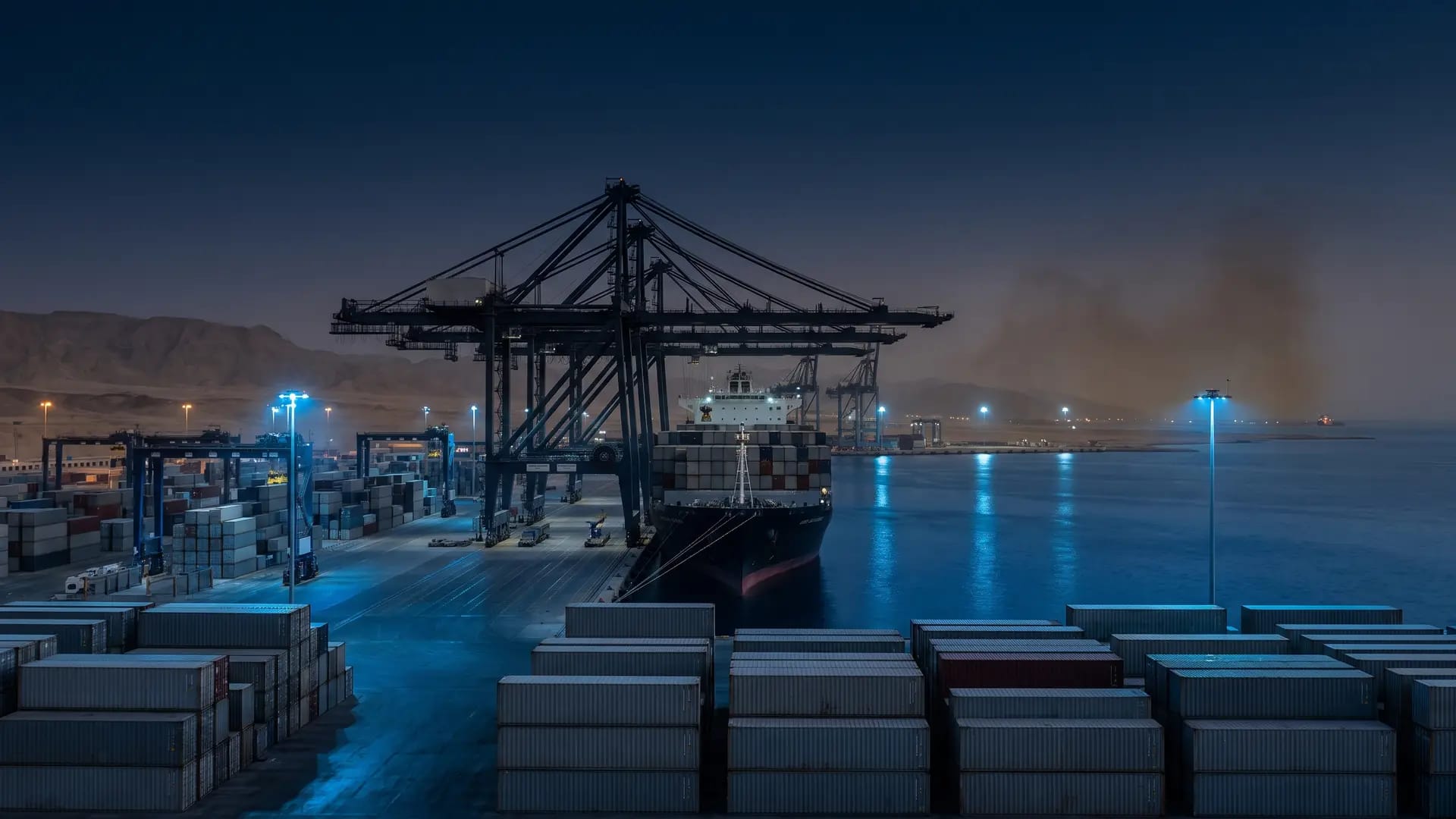
Jeddah is the Kingdom's front door for goods arriving by sea, and that single fact determines how logistics companies there make money, where they add value, and where they can quietly cost you a quarter's margin.
The useful mental model is a chain of four links, each sold by a different kind of company. First, ocean freight: a shipping line moves your container from origin to a berth at Jeddah Islamic Port. Second, terminal handling: an operator discharges the box, stacks it and holds it in the yard. Third, clearance: a licensed customs broker files your declaration on FASAH, satisfies whichever regulator has an interest in your product, and settles or defers the duty and VAT. Fourth, inland: a trucking leg to your warehouse, or a short move into a bonded facility beside the port. Most Jeddah logistics companies sell links two through four as a bundle and call it freight forwarding. The bundle is genuinely convenient, and it is also where the margin hides.
RoleThe Kingdom's Red Sea import gateway
Terminal CapacitySouth Container Terminal 4m TEU (operator-stated)
DeclarationManifest and Bayan due before the ship arrives
Import TaxesDuty on CIF, then 15% VAT on CIF plus duty
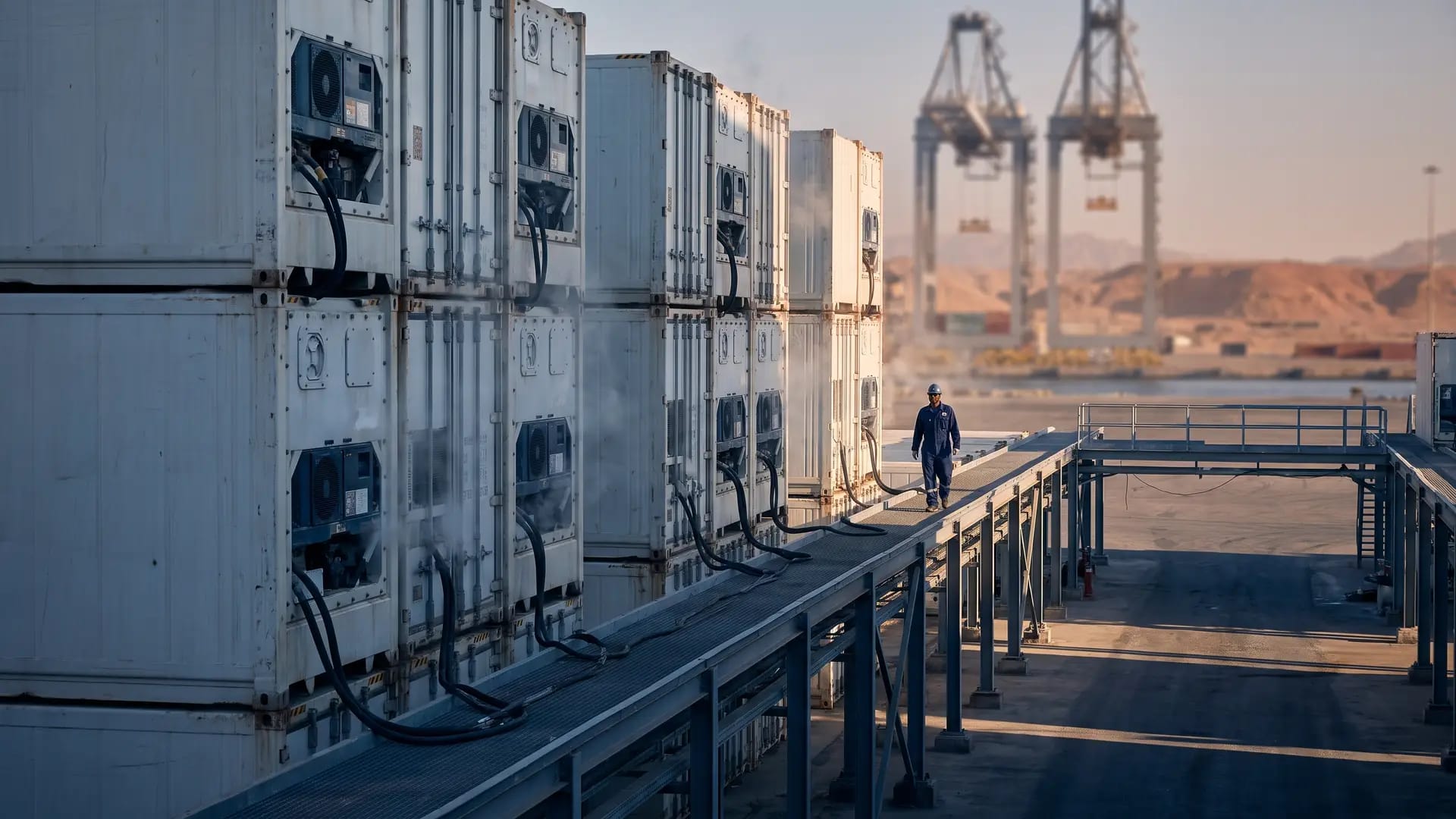
Scale claims in this market need reading carefully. Mawani said in July 2026 it would invest SAR 641 million, around USD 170 million, alongside DP World and Red Sea Gateway Terminal, adding three container cranes, 27 rubber-tyred gantry cranes, 91 terminal trucks and roughly 200,000 square metres of terminal space, and raising the port's cold storage rooms from eight to 75. DP World has separately stated that its modernised South Container Terminal moved from 1.8 million to 4 million TEU of annual capacity with headroom toward 5 million. Those are authority and operator statements rather than audited throughput, and published totals for the whole port range from about 7.5 million TEU to figures above 13 million depending on which release you read. Treat capacity as a signal of investment direction, not a number to plan against.
The Clearance Chain, Step by Step
If you understand one process in this article, make it this one. Almost every avoidable cost an importer eats in Jeddah is created at a specific point in this sequence, usually several weeks before the ship arrives.
Saudi customs clearance runs through FASAH, the national single window operated by Tabadul under the supervision of the Zakat, Tax and Customs Authority. FASAH is not merely a customs portal. It is the connective tissue between importers, brokers, shipping agents, the ports and every regulator with a say over what enters the country, including SASO, the Saudi Food and Drug Authority and the Ministry of Commerce. Your declaration, your permits, your payment and your release all live in the same place, which is why a problem with one agency surfaces to you as a customs hold.
01
Before the vessel sails
Conformity, classification and documents are decided here, not at the port. You need the correct 12-digit HS code, a commercial invoice and packing list that agree with it, a certificate of origin, the bill of lading and, for regulated goods, valid SABER certificates. Every one of these is cheap to fix in the exporter's office and expensive to fix in a container yard.
02
Before arrival — the advance declaration
ZATCA has required advance submission of the manifest and customs declaration for sea arrivals since 29 October 2025, with a stated minimum of 72 hours before arrival from distant ports, 24 hours from nearby ports, and any time before arrival on voyages under 24 hours. Your broker needs the full document set well ahead of that clock, which in practice means before the vessel departs.
03
On arrival — the declaration is routed
Compliant shipments move on documents alone; flagged ones get a document review or a physical inspection. ZATCA operates a stated clearance-within-two-hours commitment under which regulatory agencies review the declaration and communicate an inspection decision within two hours of receiving it. That is a decision clock, not a release guarantee — an inspection referral still adds days.
04
Duty and VAT are assessed
Customs duty is calculated on the CIF value — goods plus insurance plus freight to the point of entry — at the rate attached to your HS code. Import VAT at 15 percent is then calculated on CIF plus duty. This is the moment a careless classification turns into a real number, and also the moment the cash leaves your account.
05
Release, delivery order and the gate
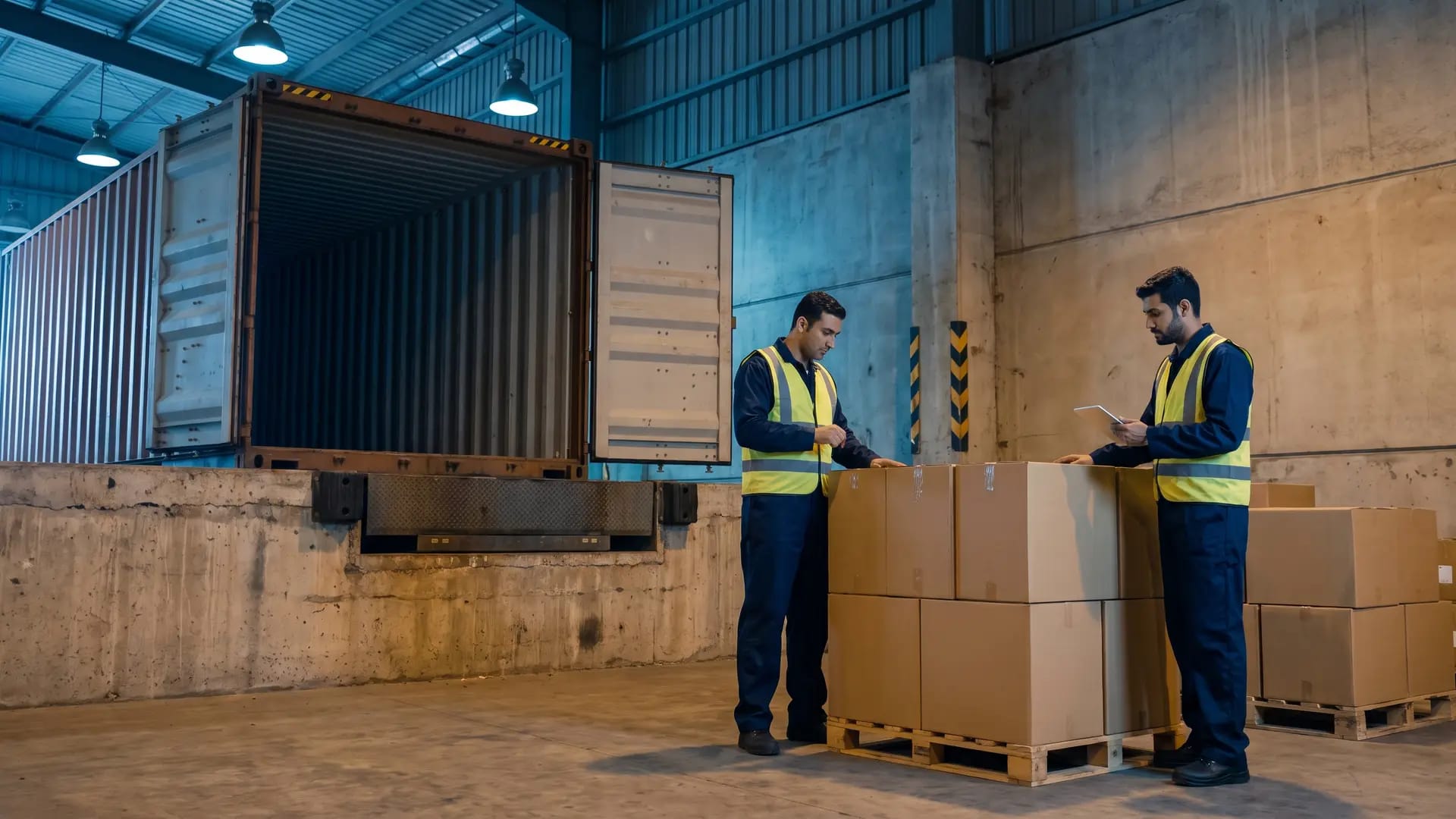
Customs release is not possession. You still need the delivery order from the shipping line, terminal charges settled, and a truck booked through the port's appointment system. Terminal free time and the carrier's detention allowance are both running throughout, which is why the last 48 hours of this chain generate so many surprise invoices.
Two structural points follow from that sequence. The first is that clearance speed is bought upstream: an importer with clean classification, valid conformity certificates and documents that agree with each other clears quickly, and one without them does not, regardless of which broker is hired. The second is that the advance-declaration rule moved the deadline that matters from arrival day to sailing week. Any internal process that starts when the vessel is already in the Red Sea is now late by design.
Jeddah Islamic Port — What You Are Actually Booking Into
Jeddah Islamic Port is not one facility. It is a set of terminals run by different operators, and which one your container lands in changes your handling charges, your free time and who you call when a box cannot be found.
The container side is split across a North Container Terminal, a South Container Terminal operated by DP World, and Red Sea Gateway Terminal, alongside general cargo, bulk and roll-on roll-off berths. There is also a passenger terminal, which matters enormously during Hajj and Umrah and matters to you mainly because it competes for the same road access. Your shipping line, not you, generally decides which terminal your box discharges at — a fact worth remembering when a forwarder quotes a single figure called port charges as though it were a published tariff.
The recent trajectory is genuinely positive and deserves to be stated without cynicism. DP World reported that its Jeddah terminal handled more than 1.3 million TEU in 2025, more than double the prior year, as services returned to the Red Sea corridor after the disruption that began in late 2023. Mawani's July 2026 equipment programme adds cranes, yard machines and a large jump in reefer capacity. What none of this tells you is how the port behaves at peak, when redirected regional cargo and ordinary seasonal volume arrive in the same fortnight — which is exactly when trade reporting through 2026 has flagged Jeddah as a regional bottleneck.
What we like
The deepest concentration of terminals, shipping-line calls and clearance capability on the Red Sea coast — most global services already stop here
Bonded and logistics-centre space sits inside or immediately beside the port, so duty-suspended storage does not require a long trucking leg
The closest gateway by road to Makkah, Madinah, Taif and the western consumer market, where a large share of Saudi retail demand sits
What to watch
Charges, free time and appointment rules differ by terminal operator and you rarely choose your terminal — get the specific terminal named on your quote
Congestion risk is real and event-driven: pilgrimage season, redirected regional cargo and Red Sea routing changes all land on the same road network
SABER and SASO — The Gate That Actually Stops Shipments
More Saudi imports are delayed by conformity paperwork than by customs valuation, and unlike a duty dispute, a conformity failure cannot be fixed after the goods have arrived.
SASO writes the Kingdom's technical regulations; SABER is the online platform through which regulated products are registered and their conformity documents issued. The structure is two-stage. A Product Certificate of Conformity is issued once per product against the applicable technical regulation, and a Shipment Certificate of Conformity is issued per consignment referencing it. Since 1 January 2025 both are required for customs clearance, and the Letter of Undertaking workaround that used to buy time is no longer accepted.
Two 2026 changes deserve attention before you place another order. First, from 1 January 2026 the platform aligned to the new 12-digit HS code shared with ZATCA, and certificates issued against the superseded code are treated as invalid — a live risk for anyone holding 2025 certificates against a shipment sailing this year. Second, conformity bodies have circulated a SASO requirement effective 18 June 2026 under which products listed in the relevant appendix need an approved Product Declaration from the Ministry of Industry and Mineral Resources before a Shipment Certificate can be issued. Lead times quoted by conformity bodies for a product certificate commonly sit in a three-to-five working day range, extending materially where a factory inspection is required. Those are provider-stated timelines rather than a published SASO service level, so build slack into the plan.
What we like
Once a product certificate exists, per-shipment certificates are quick and inexpensive — the pain is front-loaded rather than recurring
SABER is integrated with FASAH, so a valid certificate is visible to customs rather than a piece of paper you chase on arrival day
The regime is public and rule-based: you can establish before ordering whether your product is regulated and against which standard
What to watch
The 12-digit HS migration invalidates certificates issued against superseded codes — audit anything obtained before 2026 rather than assuming it holds
Timelines are quoted by conformity bodies, not guaranteed by SASO, and a factory inspection can add weeks that no forwarder is able to compress
Freight Forwarders and Customs Brokers in Jeddah
This is the part of the decision most importers get backwards. They shop the freight rate and accept whatever clearance arrangement comes attached, when the clearance relationship is the one that determines whether the rate survives contact with the port.
Jeddah has a deep bench. BAFCO markets three decades of operating at Jeddah Islamic Port with in-house customs teams and branches across the Kingdom. MFS Arabia Logistics is headquartered in the city and sells air and sea freight alongside clearance. Crane Worldwide Logistics runs a Jeddah office near King Abdulaziz International Airport covering air, ocean, customs and warehousing. Globus and Bahkaly operate in the same space, and Bahri Logistics — the logistics arm of the national shipping company — brings its own bonded facility at the port. Those are self-descriptions drawn from company material rather than a ranking, and the sensible way to read the list is as evidence that capability here is common. Differentiation comes from your specific commodity and your specific volume, not from the brochure.
What separates a good broker from a cheap one is boring and measurable. Do they classify your goods themselves and stand behind the HS code, or copy whatever the exporter wrote on the invoice? Will they file the advance declaration against a documented cut-off, or wait for you to chase? Do they hold your SABER status as part of a pre-shipment check? And when a container is referred for inspection, who physically attends, and how fast? Ask those four questions in writing before you compare prices. A forwarder who answers them precisely is worth more than one who is a few hundred riyals cheaper per container, because inspection days and demurrage days dwarf the spread on any quote.
What we like
A single accountable party across ocean, clearance and the inland leg removes the handover gaps where containers quietly sit
Established Jeddah brokers know the terminal-level and regulator-level quirks that never appear in any written procedure
Most will run a pre-shipment document check at no charge if you ask — the highest-return unpaid service anywhere in this chain
What to watch
No Jeddah forwarder publishes a rate card, and bundled quotes hide which link is expensive — insist on a line-by-line breakdown
Sales scope and operational scope differ; get the specific services, the named clearance entity and the document cut-offs into the contract
Bonded Zones, Re-Export and Duty Deferral
This is the most underused lever available to an importer in Jeddah, and the one that most changes the arithmetic for anyone buying in bulk and selling down over months.
A bonded zone is customs-supervised space where goods sit without duty and import VAT falling due. You pay when the goods leave for the domestic market; if they leave the Kingdom instead, you may not pay at all. For an importer landing a full container that will sell over two quarters, that is a direct working-capital saving. For anyone using the Kingdom as a regional distribution point, it is the difference between a viable re-export business and an uncompetitive one. Bahri Logistics launched a bonded zone at Jeddah Islamic Port itself, in collaboration with ZATCA and Mawani, positioned at import and export businesses, e-commerce platforms and temperature-controlled sectors such as pharmaceuticals and food.
Supply is expanding quickly. Mawani reported in July 2026 that it had signed seven agreements worth close to SAR 1 billion for logistics centres at Jeddah Islamic Port and the Al-Khumra zone, covering more than 384,000 square metres for storage, consolidation and re-export, including two agreements with JD.com at a stated SAR 700 million across 93,000 square metres — bringing the Kingdom's total of port-based logistics centres to 34, of which 17 sit at Jeddah. The regulatory side moved too: ZATCA's governor approved amendments to the customs procedure controls and the bonded zone rules in June 2026, and operators are expected to run inventory systems that report into ZATCA platforms in real time. That last point is the catch. Bonded status is not a warehouse with a different sign on the door; it is a compliance obligation with system requirements attached.
What we like
Duty and import VAT are suspended while goods sit, which is a direct working-capital saving on slow-moving stock
Re-export out of the Kingdom can avoid the duty entirely, making Jeddah viable as a regional distribution point rather than only a destination
Supply is growing fast, including reefer and consolidation space, so this is one of the few areas where a smaller importer has real negotiating room
What to watch
Real-time inventory reporting into ZATCA systems is a genuine operational requirement — establish in writing whether you or the operator owns it
Deferral is not avoidance for domestic sales; model the cash-flow benefit honestly rather than treating suspended duty as a discount
Six Things That Trip Up Jeddah Import Decisions
These are the six mistakes we see cost importers the most money on this lane, in roughly the order they do damage.
01
Letting the exporter pick the HS code
The classification on your supplier's commercial invoice was written for their convenience, not your duty liability, and Saudi Arabia moved to a 12-digit tariff structure in 2026. Get the code determined against ZATCA's tariff tool and confirmed by your broker before the goods ship. Duty, conformity requirements and inspection risk all hang off it.
02
Treating SABER as a shipping document
Conformity is a pre-shipment activity. A product certificate takes days and a factory inspection can take weeks, and there is no version of this that resolves while a container sits in the yard accruing storage. Check regulated status at the point of ordering, not the point of loading.
03
Buying on the freight rate alone
Ocean rates are volatile and forwarder quotes are bundled. A rate that looks a few hundred riyals better per container is erased by one inspection referral, three days of demurrage, or a terminal handling line that was never quoted. Compare total landed cost per unit sold, not freight per container.
04
Ignoring free time until it expires
Terminal storage free time and carrier detention free time are separate clocks with separate owners, and both run while you resolve a document problem. One Saudi forwarder's published 2026 guidance puts demurrage in the region of USD 150 to USD 300 per container per day, escalating in tiers. That is a third-party estimate rather than a tariff, but the order of magnitude is the point.
05
Assuming the de minimis rule covers you
The widely cited SAR 1,000 duty-free threshold applies to low-value consignments, does not remove the 15 percent import VAT, and does not cover restricted or regulated goods at any value. Building a commercial import model around splitting shipments below a threshold is a strategy that fails the first audit.
06
Planning around a single gateway
Jeddah is the default, not the only option. King Abdullah Port sits about 120 kilometres north, air freight through King Abdulaziz International Airport is a legitimate answer for high-value or urgent goods, and the Gulf coast is better for anything ultimately destined for Riyadh or the Eastern Province. Trade reporting through 2026 has repeatedly flagged Jeddah as a regional bottleneck, so a pre-qualified second routing is cheap insurance.
What Landed Cost Is Actually Made Of
We are going to be explicit about what is and is not knowable here, because this is where import guides start inventing numbers. Nobody publishes an ocean freight rate you can rely on: container rates move week to week with vessel capacity, Red Sea versus Cape routing, fuel and season. No Jeddah forwarder publishes a clearance tariff either, because quotes are private and negotiated on volume. What is public and stable is the structure of the bill, and the structure is what you can actually manage.
Cost line
Usually billed on
What moves it
Get in writing
Goods, freight and insurance (CIF)
Invoice value plus ocean freight plus marine insurance
Carrier capacity, Red Sea versus Cape routing, fuel, peak season, container type
The Incoterm, so it is unambiguous which leg each party is paying for
Customs duty
A percentage of CIF value set by your HS code
The 12-digit classification and any preferential origin you can evidence
The exact code your broker will declare, confirmed before the goods ship
Import VAT
15 percent of CIF plus duty, at clearance
Nothing — the rate is flat, but the timing is a real cash-flow cost
How it is settled and how it flows into your VAT return
Conformity (SABER)
Per product certificate, plus a certificate per shipment
Whether the product is regulated, and whether a factory inspection is required
The conformity body, the fee and the lead time before the vessel sails
Terminal and port charges
Per container and per move, plus storage once free time expires
Which terminal your line uses, congestion, whether the box is stripped at the port
Free days at the terminal and the daily rate the moment they run out
Clearance and inland delivery
Per declaration, plus per trailer to your door
Number of HS lines declared, inspection channel, distance to your warehouse
Every line item separately, including documentation and handling fees
The two rates that are genuinely published are the tax rates, and they are the ones importers most often model wrong. Under the GCC Common Customs Tariff most goods entering Saudi Arabia attract 5 percent duty on the CIF value, with a spread running from zero on certain books, medical goods and basic foods, up to materially higher bands on selected manufactured goods, and to punitive levels on tobacco. Import VAT is 15 percent and — this is the part people miss — it is charged on CIF plus duty, not on the invoice value. Look your specific code up in ZATCA's integrated tariff before you commit to a retail price, because a higher band on a product you assumed was 5 percent is a margin event, not a rounding error.
The second thing worth internalising is that the controllable costs are not the freight. They are inspection risk, free time and classification. A clean declaration that clears on documents, collected inside the terminal's free days on a truck booked through the port appointment system, costs a fraction of the same container referred for physical inspection and collected on day nine. None of that is bought from a forwarder. It is bought with preparation, and it is available to a small importer on exactly the same terms as a large one.
The process that works is unglamorous. Take twelve months of purchase orders with HS codes, volumes, origins and container types. Send that exact file to three Jeddah forwarders and ask each to quote every line in the table above separately, with free-time allowances and post-free-time daily rates stated in writing. Then price the same shipments through King Abdullah Port with the extra trucking leg included. You end up with three genuinely comparable numbers and a benchmark, which is more than any published figure in this market will ever give you.
The Other Gateways Worth Pricing
Jeddah Islamic Port is the default for west-region imports, and defaults deserve to be tested. These are the alternatives worth putting into the same tender, with the trade-off stated plainly in each case rather than buried.
Gateway
Best For
Handles Well
Watch For
Rating
Jeddah Islamic Port
West-region imports and Makkah-Madinah distribution
Container volume, bonded space, the most line calls
Peak congestion and event-driven road pressure
4.5
King Abdullah Port
Transshipment and congestion relief
Modern terminal design; strong throughput ranking
Roughly 120 km of trucking back to Jeddah demand
4.2
King Abdulaziz International Airport
High-value, urgent or launch stock
Speed and comparatively predictable transit
Cost per kilo; conformity rules are unchanged
4.0
King Abdulaziz Port, Dammam
Goods destined for Riyadh and the Eastern Province
Gulf-side services and the inland corridor to the capital
Wrong side of the country for western demand
3.9
King Abdullah Port
A privately developed deep-water port at Rabigh, north of Jeddah on the same Red Sea coast, which has climbed the Lloyd's List top-100 rankings and placed 70th in the 2024 edition on 2023 throughput of 2,929,807 TEU. Published capacity claims for it vary enormously between sources, which is a good reason to read ultimate design capacity and current operating capacity as two different things.
The obvious second routing to pre-qualify. It earns its place when Jeddah is congested or when your line already calls there, and loses it when your goods are bound for the Makkah and Madinah corridor and the extra road leg eats the saving.
Air freight via Jeddah
King Abdulaziz International Airport is the western region's air gateway, and forwarders including Crane Worldwide run Jeddah operations built around it. Air converts a multi-week ocean lead time into days, which for launch stock, high-value goods or a stockout on a best-seller is occasionally the cheapest option available even at several times the freight cost.
Correct for a narrow set of shipments and ruinous as a default. The trap is assuming air bypasses compliance — SABER, classification and the FASAH declaration are unchanged, so a certificate problem grounds an air shipment just as firmly as a sea one.
King Abdulaziz Port, Dammam
The Kingdom's main Gulf-side container port, and the natural entry point for goods whose final destination is Riyadh or the Eastern Province. For a seller whose customers concentrate in the centre and east of the country, routing through Jeddah means paying to cross the peninsula by road on every container.
Not a Jeddah competitor so much as a different answer to a different question. Map where your orders actually ship to before assuming the Red Sea coast is your gateway.
Our Verdict
Our Verdict on Jeddah Logistics in 2026
There is no single best logistics company in Jeddah, and any list that ranks them without asking what you import and where it is going is not a recommendation, it is an advertisement. What follows is the structure we would actually build for an importer selling into the Kingdom.
Best default gateway
Jeddah Islamic Port4.5/5
The deepest concentration of terminals, line calls, brokers and bonded space on the Red Sea coast, with a visible investment programme behind it. Marked down only for event-driven congestion risk you cannot negotiate away.
The relationship that matters
One accountable forwarder4.6/5
Ocean, clearance and the inland leg under one contract, with classification, document cut-offs and free-time terms written down. Handover gaps, not freight rates, are what cost importers money on this lane.
Biggest cost lever
Bonded and re-export space4.3/5
Duty and import VAT suspended while stock sits, expanding supply at and beside the port, and genuine negotiating room. It only counts if you can meet the real-time inventory reporting obligation.
Cheapest insurance
A pre-qualified second routing4.2/5
King Abdullah Port, or air through Jeddah, priced and papered before you need it. Congestion is the one variable on this lane that no contract clause protects you from.
One closing caution, in the spirit of the rest of this piece. Every capacity, throughput and investment figure quoted publicly about Jeddah — including the ones we have repeated here with attribution — comes from a port authority, a terminal operator or a press release, and published totals for the same port disagree with each other by nearly a factor of two. None of it is audited, and none of it predicts how your container behaves in the week it arrives. Treat the numbers as direction of travel, get your own quotes in writing against your own shipment file, and spend your energy on the two things genuinely within your control: correct classification and valid conformity before the vessel sails.
Frequently Asked Questions
01How long does customs clearance take at Jeddah Islamic Port?
It depends far more on your paperwork than on the port. ZATCA operates a stated clearance-within-two-hours commitment under which regulatory agencies review the declaration and communicate an inspection decision within two hours of receiving it, and a compliant shipment that passes on documents alone can clear very quickly. A wrong HS code, a missing SABER certificate or an invoice that disagrees with the packing list triggers a document review or a physical inspection instead, and that is measured in days rather than hours. Since 29 October 2025 the manifest and declaration must also be filed before arrival — a stated minimum of 72 hours ahead from distant ports and 24 hours from nearby ones — so the deadline that actually governs you now falls before the vessel sails, not when it docks.
02What documents do I need to import into Saudi Arabia through Jeddah?
The core shipment set is a commercial invoice, a packing list, a bill of lading, a certificate of origin and, for regulated products, a Product Certificate of Conformity plus a Shipment Certificate of Conformity issued through SABER. Behind those sit the entity-level pieces: a Saudi commercial registration, a customs file linked to it, VAT registration where you are above the registration threshold, and either a FASAH account or a licensed customs broker acting on your behalf. The declaration itself is filed on FASAH, which connects to SASO, the Saudi Food and Drug Authority and the Ministry of Commerce, so a permit problem at any of those agencies reaches you as a customs hold rather than as a separate notification.
03How much are customs duty and VAT on imports to Saudi Arabia?
Under the GCC Common Customs Tariff most goods attract 5 percent duty calculated on the CIF value — goods plus insurance plus freight to the point of entry — with rates running from zero on certain books, medical items and basic foods, up to substantially higher bands on selected manufactured goods, and to punitive levels on tobacco. Import VAT is 15 percent and is charged on CIF plus duty, not on the invoice value alone. There is a widely cited SAR 1,000 duty-free threshold for low-value consignments, but it does not remove the VAT and it does not cover restricted goods. Verify your specific 12-digit HS code in ZATCA's integrated tariff before you price anything, because rates within the same product family differ by band.
04Do I really need a SABER certificate, and what happens without one?
If your product falls under a Saudi technical regulation then yes, and without valid certificates the shipment is not released. Since 1 January 2025 both a Product Certificate of Conformity and a per-consignment Shipment Certificate of Conformity are required, and the Letter of Undertaking route that used to buy time is no longer accepted. Two 2026 changes make this harder for the unprepared: the platform moved to the new 12-digit HS code from 1 January 2026, and certificates issued against the superseded code are treated as invalid; and conformity bodies have circulated a requirement effective 18 June 2026 for certain listed products to hold an approved Product Declaration from the Ministry of Industry and Mineral Resources before a shipment certificate can be issued. Check regulated status when you place the order, not when you book the vessel.
05Should I import through Jeddah Islamic Port or King Abdullah Port?
Start with where your customers are. If demand sits in Jeddah, Makkah, Madinah, Taif and the western region generally, Jeddah Islamic Port is the default: more line calls, more brokers, more bonded space and no extra road leg. King Abdullah Port at Rabigh is roughly 120 kilometres north and becomes a strong alternative when your shipping line already calls there, when Jeddah is congested, or when you are transshipping rather than importing for domestic sale. It has climbed the Lloyd's List top-100 rankings, placing 70th in the 2024 edition on 2023 throughput of 2,929,807 TEU, though published capacity claims for it vary widely between sources. For most importers the right structure is Jeddah as the default with the second routing already quoted and papered so it can be used at short notice.
Share this article:
Never Pick the
Wrong Tool Again.
Get weekly expert recommendations, honest comparisons, and exclusive guides — tailored for the Middle East market.