Geidea Review (2026): POS & Payments for Saudi Merchants
lkwjd EditorialJuly 31, 202611 min read
LK
lkwjd EditorialIndependent software reviews for Saudi and Gulf businesses
This article may contain affiliate links. If you purchase through these links, we may earn a commission at no extra cost to you. This helps support our independent reviews.
Key Takeaways
Geidea is the default acquirer in Saudi Arabia rather than a niche choice. It was the first non-bank institution to receive a merchant acquiring licence from the Saudi Central Bank (SAMA) in March 2021, and Mordor Intelligence puts its share of installed POS units in the Kingdom above 75%.
Geidea does not publish terminal prices or merchant rates anywhere on its Saudi site. Every quote is negotiated, which means two shops on the same street can end up on different commercials for identical hardware.
The fee that matters most is not Geidea's to set. SAMA caps the merchant service charge on mada debit at 0.80% of the transaction, with a maximum of SAR 40, and explicitly forbids acquirers from adding installation, monthly, maintenance or communication fees to POS terminals.
Settlement speed depends on your bank's city. Geidea's published card-present terms settle merchants with Riyadh settlement accounts within one business day, while accounts outside Riyadh are settled twice weekly, on Tuesday and Thursday.
Geidea is an excellent payments layer and a thin restaurant-operations layer. If you run a multi-branch F&B business you will almost certainly still want a dedicated restaurant platform such as Foodics on top of it.
Why the Acquirer Matters More Than the POS Screen
Most Saudi merchants choose their point-of-sale software first and their payment acquirer second, almost as an afterthought. That is backwards. The POS screen decides how pleasant your cashier's shift is; the acquirer decides when your money arrives, what percentage of every sale you keep, and who you call at 9pm on a Thursday when the terminal stops reading cards.
Geidea sits squarely in that second category. Founded in Riyadh in 2008, it spent its first decade as a terminal supplier working behind Saudi banks. The structural change came in March 2021, when SAMA granted it a merchant acquiring licence — the first ever issued to a non-bank institution in the Kingdom. That licence is the whole story. It means Geidea can onboard you, process your transaction, and settle funds into your account without a bank sitting in the middle taking a cut and setting the timetable.
The scale that followed is genuinely hard to argue with. Geidea reports more than 150,000 merchants, over 700,000 deployed terminals, and upwards of five million transactions a day. Mordor Intelligence's Saudi POS terminal market analysis credits the company with more than 75% of installed units in the Kingdom. When a market is that concentrated, the practical question stops being "is Geidea any good" and becomes "is there a specific reason not to use the default".
This review answers that second question. We looked at what Geidea publishes, what it deliberately does not publish, what SAMA's rulebook forces it to do regardless of what any salesperson tells you, and where the product genuinely falls short for restaurant and multi-branch retail operators. We have no commercial relationship with Geidea. We do have an affiliate relationship with Foodics, which we disclose above and which we have tried hard not to let colour the analysis — Foodics and Geidea solve different problems and frequently sit in the same stack.
Geidea at a Glance: The Five Product Lines
Geidea sells five distinct things, and merchants routinely confuse them during the sales conversation. Ratings below are our editorial assessment, scored out of 5 against what a Saudi merchant realistically needs in 2026.
Product
Best For
Card Acceptance
Hardware Needed
Published Pricing
Our Score
Payment Terminals
Fixed counters, restaurants, retail floors
mada, Visa, Mastercard, contactless, wallets
Geidea-supplied terminal
Not published
4.5/5
SoftPOS / Mobile POS
Delivery drivers, stalls, pop-ups, home businesses
Contactless cards, wallets, wearables
NFC Android phone only
Not published
4.5/5
Payment Gateway
E-commerce and app checkouts
mada and international cards online
None — API integration
Not published
3.5/5
QR Payments
Queue-busting, table pay, low-ticket volume
Wallet and app-based
Printed code or screen
Not published
3.5/5
Order Aggregation
Restaurants juggling delivery platforms
Not applicable
Geidea POS device
Not published
3/5
Terminals and Hardware: What You Actually Sign For
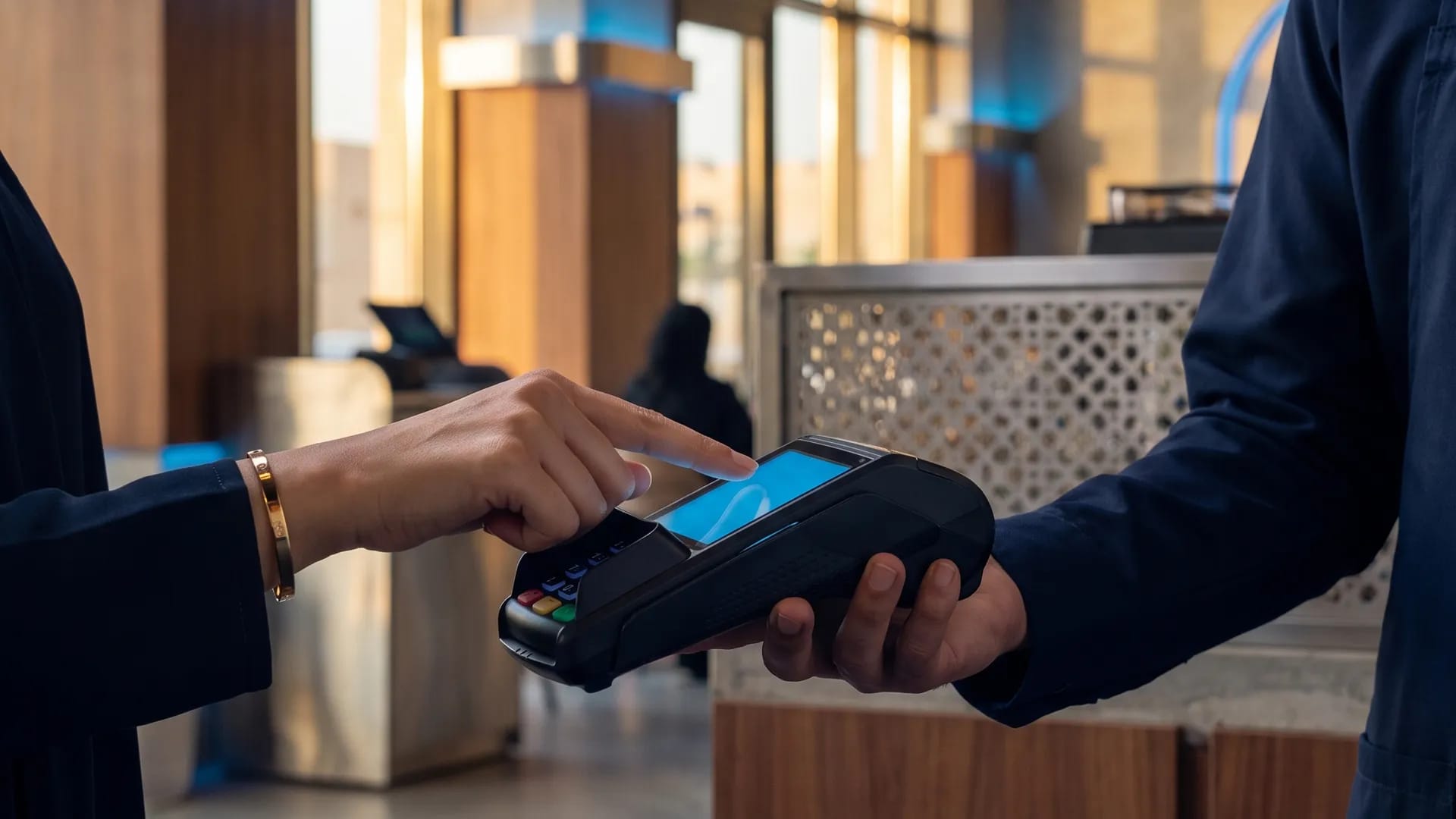
Geidea's terminal fleet is the part of the business that earned the market share, and in daily use it is unremarkable in the best possible way — it reads the card, it prints, it reconnects.
The devices accept the full range a Saudi merchant needs: mada debit, Visa, Mastercard, contactless taps, and phone and watch wallets. That matters more than it sounds. A meaningful share of terminal complaints in the Kingdom come from older estates that handle mada beautifully and then stumble on an international card presented by a tourist in Jeddah or a business traveller in Riyadh. We saw no evidence of that gap in Geidea's current line-up.
What you will not find is a price. Geidea publishes no hardware cost, no rental figure and no rate card on its Saudi site, and it did not respond to our request for one before publication. Pricing is quote-only and varies by merchant category, expected volume and branch count. Treat any figure a salesperson quotes as an opening position, not a tariff — and get the settlement terms, the rate on international cards, and the replacement SLA for a dead terminal written into the agreement rather than promised on a call.
What Works
Full acceptance range out of the box — mada, Visa, Mastercard, contactless and mobile wallets on the same device.
The largest field-support footprint in the Kingdom. Geidea states it runs more than 300 technical support agents across Saudi Arabia, which is the single biggest practical advantage of going with the incumbent.
SAMA-licensed end to end, so onboarding, processing and settlement sit with one regulated counterparty instead of being split across an acquirer and a sponsoring bank.
Deployment density means engineers are usually already working in your city, which shortens swap-out times for a failed unit compared with smaller acquirers.
What Doesn't
Zero pricing transparency. Nothing — hardware, rates, contract length — is published, so you cannot benchmark a quote without collecting competing offers yourself.
Market dominance cuts both ways. With roughly three quarters of installed terminals, Geidea has limited commercial pressure to sharpen a quote for a single-branch merchant who has no volume leverage.
Fees: What SAMA Fixes and What Geidea Negotiates
This is the section most merchants get wrong, and it is worth being precise: the headline fee on your most common transaction type is set by the regulator, not by your acquirer.
For mada debit at a point of sale, acquiring institutions are limited to a merchant service charge of 0.80% of the transaction value, capped at SAR 40 per transaction. That ceiling applies to Geidea exactly as it applies to a bank acquirer. SAMA also reiterates in its rulebook that acquirers must not impose additional fees — installation, monthly, maintenance or communication charges — on POS terminals across commercial activities. If a quote includes a monthly terminal rental line, that is a conversation worth having before you sign.
Settlement timing is where Geidea's own terms do the talking, and it is uneven. Its published Saudi card-present terms state that merchants whose settlement bank account is in Riyadh receive funds within one business day of Geidea receiving them from the partner bank, while merchants banking outside Riyadh are settled twice weekly, on Tuesday and Thursday. Geidea also notes that mada transactions verify and settle faster than Mastercard, Visa, American Express and other non-local schemes. For a restaurant group in Dammam or Abha running thin on working capital, a Tuesday-and-Thursday cycle is a real constraint, and it is the sort of detail that never appears on a marketing page.
Fixed by Regulation
mada debit at POS: merchant service charge capped at 0.80%, maximum SAR 40 per transaction.
No add-on POS fees. SAMA prohibits installation, monthly, maintenance and communication charges on terminals.
International card transactions are capped at 2% under the fees framework SAMA announced in December 2025, which took effect within 60 days of the announcement.
Cross-GCC POS transactions carry a 1% service fee capped at SAR 37.50, paid between networks rather than levied separately on you.
Left to Negotiation
Your actual blended rate, any volume tiering, and chargeback handling terms are all quote-specific and unpublished.
Settlement cadence is contractual, not regulatory — and defaults to twice weekly if your settlement account sits outside Riyadh.
SoftPOS: Turning an Android Phone Into a Terminal
SoftPOS is the most genuinely interesting thing Geidea has built, and the clearest case where the incumbent moved first rather than defending.
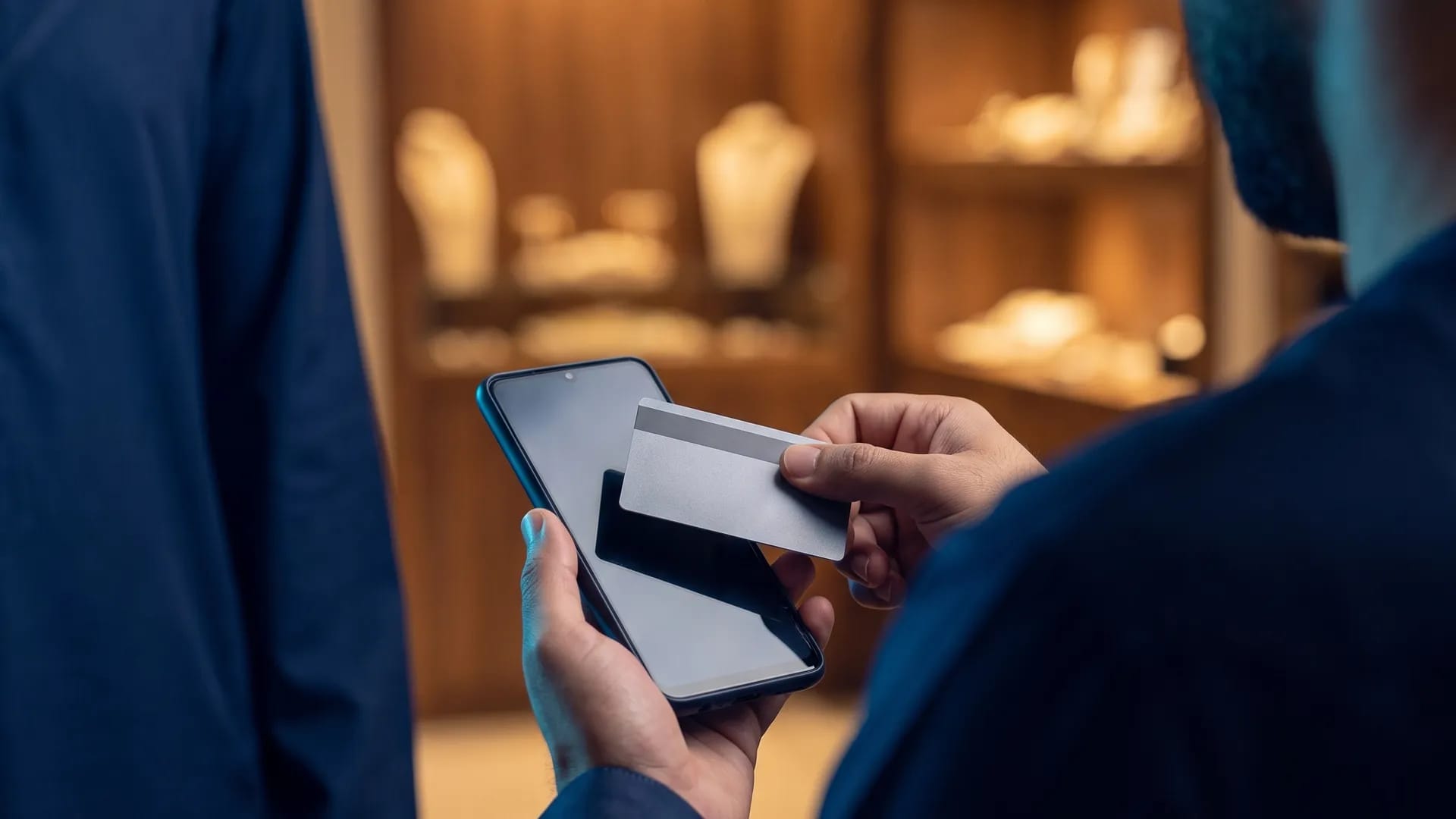
The product turns an NFC-capable Android phone into a contactless acceptance device with no separate terminal, no dock and no card reader. Geidea launched it in partnership with SABB under Saudi Payments' guidance, and describes itself as the first fintech in the region to ship an app-based tap-on-phone solution. It accepts contactless cards, mobile wallets and wearables. Practically, that collapses the cost of getting a new merchant accepting cards from a hardware procurement exercise into an app download and a KYC check.
For the right merchant this is transformative. Delivery drivers taking payment at the door, weekend market stalls, home-based food businesses, mobile service technicians, and restaurants that want to take payment at the table without buying a second terminal per section all benefit immediately. The limitation is equally clear: tap-on-phone is contactless-only. A customer presenting a chip-and-PIN card with no contactless function, or a high-value transaction above the contactless ceiling that needs PIN entry on a certified pinpad, still needs real hardware. SoftPOS is an excellent addition to a terminal estate and a risky sole solution for a business with meaningful average ticket sizes.
What Works
No hardware cost, no procurement lead time — an existing NFC Android phone becomes an acceptance device.
Accepts contactless cards, mobile wallets and wearables, which covers the overwhelming majority of Saudi in-person payment behaviour.
Ideal as an overflow or mobile channel alongside fixed terminals, for delivery, queue-busting and table-side payment.
Launched with SABB under Saudi Payments' guidance, so it sits inside the regulated rails rather than beside them.
What Doesn't
Contactless only. Chip-and-PIN cards and transactions requiring PIN entry on a certified pinpad still need a physical terminal.
Pricing is, again, not published — and bundled SoftPOS offers from competitors are easier to compare because their monthly figure is public.
Integrations, Restaurant Stacks and ZATCA
Geidea's weakest dimension is not payments. It is everything a restaurant needs once the payment has cleared.
Geidea's own POS platform spans terminals, mobile POS, SoftPOS, an online gateway, QR payments and delivery-order aggregation. That last item is useful — pulling multiple delivery platforms into one screen genuinely reduces tablet clutter on a counter. But it is not a restaurant management system. Recipe-level inventory, ingredient-level cost of goods, multi-branch stock transfers, shift and payroll management, kitchen display routing and loyalty are either shallow or absent. Foodics, by contrast, publishes a marketplace of more than 100 third-party integrations across delivery, accounting and loyalty precisely because that operational depth is its product.
On ZATCA, the compliance burden is shared and worth understanding correctly. Phase 2 of Fatoora requires POS and ERP systems to generate real-time XML invoices with cryptographic stamps and integrate with ZATCA's portal. That is an obligation on your invoicing system, not on your card acquirer. Geidea's SAMA licensing gives you a compliant, supervised payment counterparty, but if you are running a serious F&B operation you should be confirming ZATCA Phase 2 integration with whoever issues your invoices — and in most Saudi restaurant stacks that is the restaurant platform, not Geidea.
What Works
One vendor covers card-present, SoftPOS, online gateway and QR, which simplifies reconciliation across channels.
Delivery-order aggregation on the POS device removes a genuine daily annoyance for restaurants running three or four platforms.
Coexists cleanly with dedicated restaurant platforms — most Saudi F&B operators run a restaurant system for operations and an acquirer like Geidea underneath it.
What Doesn't
Thin restaurant operations layer: no meaningful recipe costing, multi-branch stock control, or workforce management compared with a purpose-built F&B platform.
Public developer and integration documentation is limited relative to the gateway-first providers, which slows custom e-commerce work.
Three Alternatives Worth Pricing Against Geidea
None of these are straight substitutes. Two are software layers that sit on top of an acquirer; one is an online-first gateway. Price them alongside Geidea rather than instead of it.
Foodics
The dominant Saudi restaurant management platform — recipe-level inventory, multi-branch reporting, workforce tools and a large integration marketplace, with its own Foodics Pay payment layer.
Best paired with, not instead of, a strong acquirer. Software costs scale quickly once branches, delivery and payroll modules are added.
Rewaa
Saudi retail POS and inventory platform aimed at shops and small chains rather than restaurants, with strong Arabic-first UX and local e-commerce integrations.
The right comparison if you are retail rather than F&B. It is an operations layer, not an acquiring licence, so you still need a payment provider underneath.
Tap Payments
Regional online-first payment gateway with a developer-oriented integration story, widely used across GCC e-commerce and app checkouts.
Worth a serious look if your revenue is mostly online. Weaker fit if your volume is in-person, where Geidea's terminal estate and field support dominate.
How to Decide: Six Questions Before You Sign
Work through these in order. The first three eliminate most of the wrong answers before you have spent an hour on demos.
01
Where is your settlement account?
Geidea's published terms settle Riyadh-based accounts within one business day and non-Riyadh accounts twice weekly, on Tuesday and Thursday. If cash flow is tight and you bank outside Riyadh, ask directly whether daily settlement is negotiable and get the answer in the contract.
02
What share of volume is mada?
If most of your turnover is mada debit, your headline cost is already capped by SAMA at 0.80% with a SAR 40 maximum, and acquirers cannot differentiate much on it. Negotiate on international card rates and settlement instead.
03
In-person or online?
Geidea's advantage is physical: terminals, engineers, coverage. If more than half your revenue arrives through a website or app, an online-first gateway deserves an equal hearing.
04
Do you need an operations platform too?
If you need recipe costing, multi-branch stock and workforce tools, budget for a restaurant or retail platform separately. Geidea is a payments layer, and treating it as an RMS will disappoint you in month three.
05
Who owns ZATCA Phase 2 in your stack?
Fatoora Phase 2 requires cryptographically stamped XML invoices integrated with ZATCA. Confirm explicitly which vendor generates and submits them — your acquirer or your POS software — and get it in writing.
06
What happens when a terminal dies?
Ask for the replacement SLA in hours, not adjectives. Geidea's 300-plus support agents across the Kingdom are its strongest card, so make the vendor commit to it contractually.
Cost Comparison: Geidea vs the Alternatives
This table is deliberately full of blanks. Saudi payment pricing is overwhelmingly quote-based, and publishing invented figures would be worse than useless. What follows is only what these vendors and the regulator actually publish.
Provider
Hardware Cost
Software / Monthly
Card Fees
Contract
Geidea
Not published — quote required
Not published
mada capped at 0.80% / SAR 40 by SAMA; international capped at 2%
Merchant agreement; term not published
Foodics
Not published — quote required
From SAR 392/month (QSR Starter)
Foodics Pay rates not published
Per cashier device, billed annually
Rewaa
Not published
Not published in sources checked
Not an acquirer — depends on your payment provider
Not published
Tap Payments
None — online gateway
Not published in sources checked
Not published — quote required
Not published
stc (SoftPOS bundle)
Bundled into monthly fee
SAR 125.35/month bundle
mada capped at 0.80% / SAR 40 by SAMA
Monthly bundle including connectivity and ZATCA certification
Regulated caps are from SAMA's rulebook and its December 2025 fees framework. Vendor figures are the published list positions we could verify at the time of writing; every merchant rate in Saudi Arabia is ultimately negotiated, so treat all of the above as a starting point and collect at least two competing quotes.
Our Verdict
Our Verdict: Who Should Actually Use Geidea
Geidea is the strongest in-person acquiring option in Saudi Arabia and it is not particularly close. The honest caveats are that it will not tell you what it costs until you are in a sales conversation, and that it is a payments company rather than an operations company — which is exactly why the best Saudi restaurant stacks pair it with something else.
Best for Restaurant Groups
Foodics + Geidea4.5/5
Run Foodics for operations — recipe costing, multi-branch stock, workforce — and put Geidea underneath it for acceptance and settlement. Geidea alone will not run a multi-branch kitchen.
Best for Independent Retail
Geidea Terminals4.5/5
For a single shop or small chain taking payment at a counter, Geidea's terminals plus the largest field-support network in the Kingdom is the low-risk default. Negotiate settlement cadence before signing.
Best for Micro Merchants
Geidea SoftPOS4.0/5
For stalls, delivery drivers and home businesses, SoftPOS removes hardware from the equation entirely. Just accept the contactless-only limit and keep a fallback for chip-and-PIN cards.
Best for Online-First
Tap Payments3.5/5
If most of your revenue is a web or app checkout, a gateway-first provider with deeper developer documentation is a fairer fight than Geidea's terminal-led strengths.
Frequently Asked Questions
01How much does a Geidea terminal cost in Saudi Arabia?
Geidea does not publish terminal prices, rental figures or a merchant rate card on its Saudi site. Pricing is quote-only and varies by merchant category, expected volume and number of branches. What is fixed is the regulated ceiling on card fees: SAMA caps the merchant service charge on mada debit at 0.80% of the transaction with a maximum of SAR 40, and prohibits acquirers from adding installation, monthly, maintenance or communication fees to POS terminals. Collect at least two competing quotes before signing anything.
02Is Geidea licensed and regulated in Saudi Arabia?
Yes. Geidea operates under the supervision of the Saudi Central Bank (SAMA) and, in March 2021, became the first non-bank institution in the Kingdom to receive a merchant acquiring licence. That licence lets it onboard merchants, process transactions and settle funds directly, without a sponsoring bank sitting between it and you.
03How fast does Geidea settle funds to my account?
It depends on where your settlement account is. Geidea's published Saudi card-present terms settle merchants whose settlement bank account is in Riyadh within one business day of Geidea receiving funds from the partner bank. Merchants whose accounts are outside Riyadh are settled twice weekly, on Tuesday and Thursday. Geidea also notes that mada transactions verify and settle faster than Mastercard, Visa, American Express and other non-local schemes.
04Does Geidea handle ZATCA e-invoicing for me?
Not on its own, and this is a common and expensive misunderstanding. ZATCA's Fatoora Phase 2 requires your invoicing system to generate cryptographically stamped XML invoices and integrate with ZATCA's portal. That obligation sits with whatever software issues your invoices — usually your POS or ERP — not with your card acquirer. Confirm explicitly which vendor in your stack generates and submits the invoices, and get it written into the contract.
05Should I use Geidea or Foodics for my restaurant?
They are not competitors in the way the question implies, and the right answer for most Saudi restaurant groups is both. Foodics is a restaurant management platform — recipe-level inventory, multi-branch reporting, workforce tools, delivery integrations — with published pricing starting at SAR 392 per month for its QSR Starter tier. Geidea is a SAMA-licensed acquirer that moves the money. Use Foodics to run the operation and Geidea to accept and settle payment underneath it. Choosing only Geidea leaves you without operational depth; choosing only a restaurant platform still leaves you needing an acquirer.
Share this article:
Never Pick the
Wrong Tool Again.
Get weekly expert recommendations, honest comparisons, and exclusive guides — tailored for the Middle East market.