

VAT Compliance Software for Saudi SMEs, Compared
This article may contain affiliate links. If you purchase through these links, we may earn a commission at no extra cost to you. This helps support our independent reviews.
Key Takeaways
- ZATCA Wave 23 (businesses above SAR 750k turnover) closed March 31, 2026. Wave 24 (above SAR 375k) must integrate by June 30, 2026 — Phase 2 is now an SME problem, not an enterprise one.
- Native Fatoora API integration beats middleware every time for SMEs. Wafeq, Zoho Books KSA, Qoyod, Mezan and Rewaa all ship direct integrations; avoid stacks that bolt a third-party clearance layer onto a generic accounting tool.
- Penalties run from SAR 5,000 to SAR 50,000 per violation — but the real cost is cash flow. A B2B invoice that fails clearance legally cannot be sent to the buyer, so receivables stall until the chain is fixed.
- For most Saudi SMEs under 20 staff, the realistic shortlist is three: Wafeq (cleanest bilingual UX), Zoho Books KSA (lowest sticker price), and Qoyod (best for Saudi project services). Retail and F&B need Rewaa or Foodics layered underneath.
- ZATCA reimburses up to SAR 2,500 per establishment for approved e-invoicing software, and the Monsha'at Mezaya programme stacks discounts of up to 63% on vendors like Rewaa. Budget for the net price, not the sticker.
The Deadline Most Saudi SMEs Are Still Underestimating
Phase 2 of Fatoora is no longer a large-enterprise concern. The ZATCA wave timeline has quietly walked down into the core SME segment, and the business impact of a missed integration is larger than the headline penalties suggest.
When Phase 2 launched in January 2023, the first wave only covered taxpayers with annual VATable turnover above SAR 3 billion. Three years later, the threshold has collapsed. Wave 23, covering businesses above SAR 750,000, closed on March 31, 2026. Wave 24, announced for entities above SAR 375,000, mandates integration between April 1 and June 30, 2026. ZATCA has publicly committed to continuing to lower the threshold until every VAT-registered taxpayer is in scope.
The direct penalty schedule ranges from SAR 5,000 to SAR 50,000 per violation — issuing a non-compliant invoice, missing required fields, failing to archive correctly. Repeat offences escalate and can trigger the loss of input VAT deductibility. For a services business that runs a SAR 200,000 tax-credit balance, that alone can be a six-figure blow.
The indirect cost is worse, and less-discussed. Under Phase 2, a B2B tax invoice must be cleared by ZATCA before it can legally be sent to the buyer. If the clearance call fails — a CSID expiry, a broken previous-invoice-hash, a malformed buyer VAT number — the invoice cannot go out at all. Receivables stall. Buyers on 60-day terms silently push to 90. We heard from three accountants in the Fatoora developer community who watched cash cycles spike by 40% after a botched integration went live before full validation.
Above SAR 750k turnover — deadline passed (March 31, 2026)
Above SAR 375k turnover — must integrate by June 30, 2026
Maximum per-violation penalty under the ZATCA schedule
Standard VAT rate in Saudi Arabia — unchanged since July 2020
What "ZATCA Phase 2 Compliant" Actually Means
Vendors have been throwing the word "compliant" around loosely since 2023. Before we compare any of them, it is worth being concrete about what the software has to do. ZATCA does not mandate any particular product — anything that passes the technical specification is acceptable — but the specification itself is uncompromising.
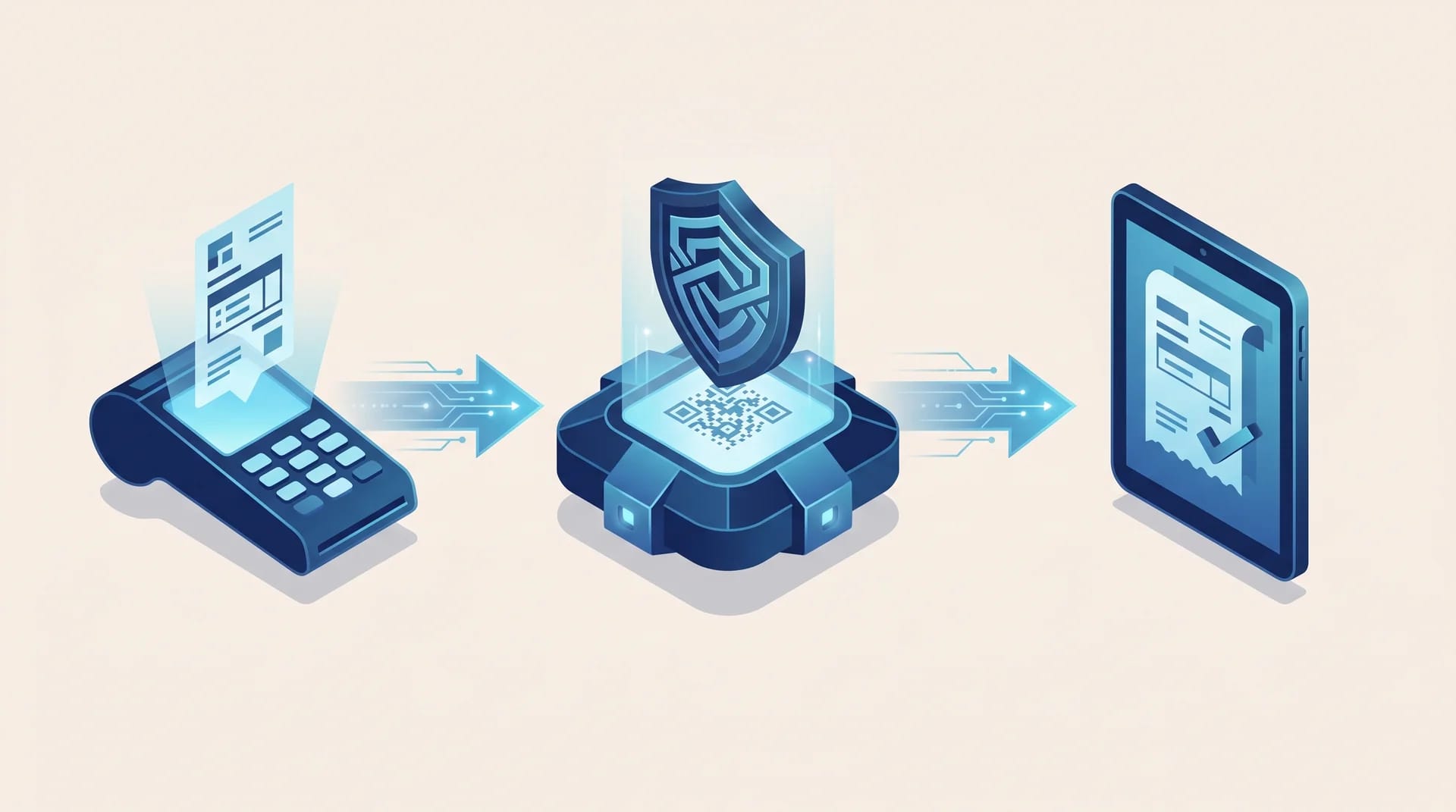
UBL 2.1 XML / PDF-A3
Standard tax invoices serialise as UBL 2.1 XML. Simplified (B2C) invoices use PDF/A-3 with the XML embedded. Human-readable PDFs alone are no longer sufficient.
Cryptographic Stamp ID
Each invoice is signed using a CSID obtained via the FATOORA portal's one-time password onboarding (valid for only one hour). CSIDs expire and must be auto-renewed in the field.
Chained Invoice Hash
Every invoice carries a hash linked to the previous invoice hash, forming a tamper-evident chain. One broken link rejects every subsequent submission until the chain is reconciled.
TLV-Encoded QR Code
Phase 2 QR codes encode seller name, VAT number, timestamp, totals, hash and signature in TLV format — not the simpler Phase 1 QR. Scanners can verify the invoice independently.
Clearance vs Reporting
B2B invoices must be pre-cleared by ZATCA before being sent to the buyer. B2C simplified invoices must be reported within 24 hours of issuance. Software must support both paths from the same interface.
6-Year Local Archive
Both the XML and the PDF/A-3 copies must be archived for six years, tamper-locked, with no post-issuance edits. Corrections are handled only via credit or debit notes.
ZATCA also publishes a non-binding Solution Providers Directory at zatca.gov.sa — filter for Phase Two qualified vendors. We recommend using that directory to cross-check any vendor claim of "ZATCA certified." Marketing language is not a substitute for appearing on the actual list.
How We Scored the 7 Platforms
We started with a longlist of twelve contenders serving Saudi SMEs in 2026 and narrowed it to the seven that an SME owner is realistically likely to evaluate. Each was scored against ten weighted criteria drawn from the research and from conversations with Saudi accountants, POS integrators, and the Fatoora developer community.
Native Fatoora Integration
Direct API connection to ZATCA — not a middleware layer. Weight: 15%.
Arabic & RTL Quality
Full bilingual UI plus correctly rendered Arabic tax invoices. Weight: 12%.
VAT Return Automation
Auto-prepared VAT return forms, ideally with direct ZATCA submission. Weight: 10%.
SME-Appropriate Pricing
Public pricing under SAR 200 per month for a small team, before enterprise tiers. Weight: 10%.
Saudi Ecosystem Integrations
Salla, Zid, Foodics, mada, STC Pay, Saudi bank feeds out of the box. Weight: 10%.
Offline Resilience
Hash-chain continuity when connectivity drops — critical for retail and F&B. Weight: 10%.
Multi-Branch & Multi-Warehouse
Real support for multiple locations, not a single-entity workaround. Weight: 8%.
Payroll, GOSI & Mudad Readiness
Built-in or tightly integrated Saudi payroll, GOSI and Mudad/WPS flows. Weight: 8%.
Audit Trail & Tamper Lock
Immutable finalised invoices, full change history, ZATCA-ready export. Weight: 9%.
Arabic-Language Support
Real KSA-hours support in Arabic — not only English ticket queues. Weight: 8%.
The 7 Contenders
Each of the seven platforms solves the ZATCA problem. Where they diverge is on the surrounding experience: how bilingual the product really is, how much depth there is beyond invoicing, how well the software handles the realities of operating in Riyadh at 2am when the FATOORA portal is slow.

1. Wafeq — The Cleanest Bilingual UX
Wafeq is the closest thing the KSA/UAE market has to a native modern SaaS: clean bilingual interface, thoughtful VAT return automation, AI-assisted receipt capture on the Plus tier and up, and genuine attention to the Arabic invoice template. Native Fatoora Phase 2 integration. Our top pick for professional services firms, agencies, and SaaS teams.
- HQ
- Dubai / Riyadh
- Certification
- Native Fatoora API
- Pricing
- SAR 99 / 119 / 199 per month (annual billing)
- Arabic
- Full RTL, dual-language invoices, Arabic-native UI
- Strengths
- Best-in-class bilingual UX, auto-prepared VAT returns, unlimited users on Premium, clean API.
- Weaknesses
- Limited native POS layer — retail and F&B customers need a separate POS stack.
- Best fit
- Services firms, agencies, consultancies, SaaS, sub-20 staff.
2. Zoho Books KSA Edition — The Lowest Sticker Price
Zoho's KSA edition is ZATCA-approved for Phase 2 and starts at SAR 60 per month for three users — the lowest paid entry among mainstream options. It is the polished end of a huge global suite, which is both the pitch and the catch. For multi-currency, multi-entity GCC SMEs it is difficult to beat. For Arabic-first operators, the UI falls behind Wafeq and Qoyod.
- HQ
- Chennai, India — KSA via local partners + direct
- Certification
- Native Fatoora integration from Standard tier
- Pricing
- SAR 60–660 per month across six tiers; free under SAR 187,500 revenue (no Phase 2 on free)
- Arabic
- Bilingual invoices; Arabic UI partial — weaker than KSA-native tools
- Strengths
- Price-to-feature ratio, mature multi-currency, enormous 3rd-party ecosystem, strong mobile app.
- Weaknesses
- Arabic UI gaps, Saudi payroll/GOSI require add-ons, variable quality of local partners.
- Best fit
- Export-oriented SMEs, multi-entity GCC operators, startups that want Zoho One.
3. Qoyod (قيود) — Built for Saudi Project Services
Qoyod is a Riyadh-based platform with deep respect for Saudi accounting conventions and a strong following in O&M contractors, project services and agencies that bill by WBS. ZATCA-directory listed, native Fatoora integration. The UI is dated next to Wafeq, but the project-cost tracking is more mature, and the native Salla/Zid/Foodics integrations are genuinely first-class.
- HQ
- Riyadh
- Certification
- Listed on ZATCA Solution Providers Directory
- Pricing
- SAR 100 / 150 / 275 per month
- Arabic
- Arabic-first, English secondary
- Strengths
- Project cost tracking, Saudi GL conventions, asset depreciation, native Salla/Zid/Foodics.
- Weaknesses
- Fewer international integrations, UI feels a generation behind modern SaaS.
- Best fit
- Services, O&M contractors, project-based agencies, 5–50 users.
4. Daftra — One Platform for Accounting, CRM, HR and Inventory
Daftra is the jack-of-all-trades in this shortlist. Egypt-founded, MENA-wide, ZATCA-certified e-invoicing plus modules for CRM, HR, inventory and a light project tracker. For SMEs that genuinely want to run the whole business on one tool, it is the cheapest serious option. For SMEs that already have best-of-breed POS or HR tools, some modules feel thinner than the specialists.
- HQ
- Cairo — strong KSA sales operation
- Certification
- Certified e-invoicing (per vendor)
- Pricing
- SAR 75–159 per month
- Arabic
- Arabic-first
- Strengths
- Unified accounting + CRM + HR + inventory, fair pricing, active Arabic support.
- Weaknesses
- Modules less deep than dedicated specialists — especially payroll and CRM.
- Best fit
- Retail, light manufacturing, trading companies wanting one tool to replace three.
5. Mezan (ميزان) — The Free-After-Reimbursement Play
Mezan is priced specifically to fall under the ZATCA SAR 2,500 reimbursement ceiling. The Starter tier — the minimum you need for Phase 2 — is SAR 763 for the first year and SAR 730 on renewal. After reimbursement, year one is effectively free for qualifying SMEs. Feature depth is modest, but the core compliance layer is solid and the invoices lock correctly post-issuance.
- HQ
- Saudi Arabia
- Certification
- Direct Fatoora integration from Starter tier
- Pricing
- SAR 511 / 763 / 1,225 per year (first year, post-discount); SAR 730 / 1,090 / 1,750 at renewal
- Arabic
- Full Arabic UI
- Strengths
- Cheapest credible Phase 2 option; reimbursement-eligible; locks finalised invoices.
- Weaknesses
- Small 3rd-party ecosystem, limited analytics, thin for multi-branch.
- Best fit
- Micro and very-small SMEs under SAR 3M revenue, single-branch, single-entity.
6. Rewaa — Retail-First, Offline-Resilient
Rewaa raised a USD 45M Series B in January 2026 and remains the retail SaaS to beat in Saudi Arabia. Native Fatoora API, free activation, and — critically — an offline mode that buffers up to 300 receipts before syncing. Stock syncs across physical and online channels. Monsha'at Mezaya discounts of up to 63% apply to qualifying SMEs. If you are running apparel, electronics, auto-parts or cosmetics retail, Rewaa deserves a demo.
- HQ
- Riyadh
- Certification
- Native Fatoora API, ZATCA auto-reporting of offline receipts on reconnect
- Pricing
- SAR 3,449 / 5,939 per year — before Monsha'at discount
- Arabic
- Arabic-first
- Strengths
- Offline buffer is best-in-class, tight Salla/Zid/Tap/HyperPay integrations, strong unit economics for retailers.
- Weaknesses
- Retail-only — not built for F&B (Foodics territory). ERP features thin for 10+ branch chains.
- Best fit
- Apparel, electronics, auto-parts, cosmetics, 1–5 branches.
7. Odoo Enterprise with a KSA Partner — When You Outgrow SaaS Suites
Odoo is the option to consider once a SaaS suite is no longer enough. Enterprise versions 15 through 19 ship the l10n_sa_edi module for Phase 2. Community edition needs a third-party certified module (Tax2Gov, Alhaditech) at roughly SAR 2,800 one-time. Licence cost is SAR 54–96 per user per month, but the real number is the implementation — SAR 18,000 to 45,000 for a small SME, rising to SAR 150,000+ for a mid-market group. Choose a reputable Gold or Silver KSA partner and the ROI is strong; choose poorly and the project will eat your 2026.
- HQ
- Belgium — delivered through KSA Gold/Silver partners
- Certification
- Native in Enterprise; 3rd-party module required for Community
- Pricing
- SAR 54–96 per user per month + implementation (SAR 18k–450k+)
- Arabic
- Supported; quality depends heavily on partner configuration
- Strengths
- ERP depth (manufacturing, multi-company, warehousing, assembly), one-platform economics at scale.
- Weaknesses
- High implementation risk, partner quality varies, long go-live, needs internal project ownership.
- Best fit
- Manufacturing, distribution, multi-entity groups, 20+ users.
Our Top Pick for Saudi SMEs: Wafeq
Clean bilingual UX, native Fatoora Phase 2 integration, unlimited users on Premium — essentially free in year one after the SAR 2,500 ZATCA reimbursement.
Start Wafeq Free TrialFeature Comparison Matrix
The raw scores, side by side. The highlight column is our overall winner on blended SME criteria — Wafeq — but the matrix is deliberately left unsorted so you can weigh the criteria that matter to you first.
| Criterion | Wafeq | Zoho Books | Qoyod | Daftra | Mezan | Rewaa | Odoo Ent. |
|---|---|---|---|---|---|---|---|
| Native Fatoora API | Yes | Yes | Yes | Yes | Yes | Yes | Yes (Enterprise) |
| Arabic / RTL UI | Full | Partial | Arabic-first | Arabic-first | Full | Arabic-first | Partner-dependent |
| Auto VAT return | Yes | Yes | Yes | Partial | Yes | Summary only | Yes |
| Entry price (SAR/mo) | 99 | 60 | 100 | 75 | ≈64 | ≈287 | 54+/user |
| Salla / Zid / Foodics | Partial | Via Zoho ecosystem | Native | Partial | Basic | Native | Via partner |
| Offline invoice buffer | No | No | Limited | No | No | Best-in-class (300 rcpts) | Configurable |
| Multi-branch | Yes | Yes | Yes | Yes | Limited | Yes | Yes (strong) |
| KSA payroll / GOSI | Integration | Zoho Payroll add-on | HRMS module | Built-in | No | No | Odoo Payroll |
| Arabic support (KSA hours) | Yes | Partner-dependent | Yes | Yes | Yes | Yes | Partner-dependent |
No vendor wins every row. The honest read: pick the two criteria that genuinely move the needle for your business — for most SMEs that is Arabic UI quality and ecosystem integrations — and let the matrix disqualify the rest.
Pricing Breakdown and the Hidden Costs No One Quotes
Public pricing pages rarely tell the whole story. Here are the real year-one numbers for a five-user small services firm running Phase 2, before and after the ZATCA reimbursement.
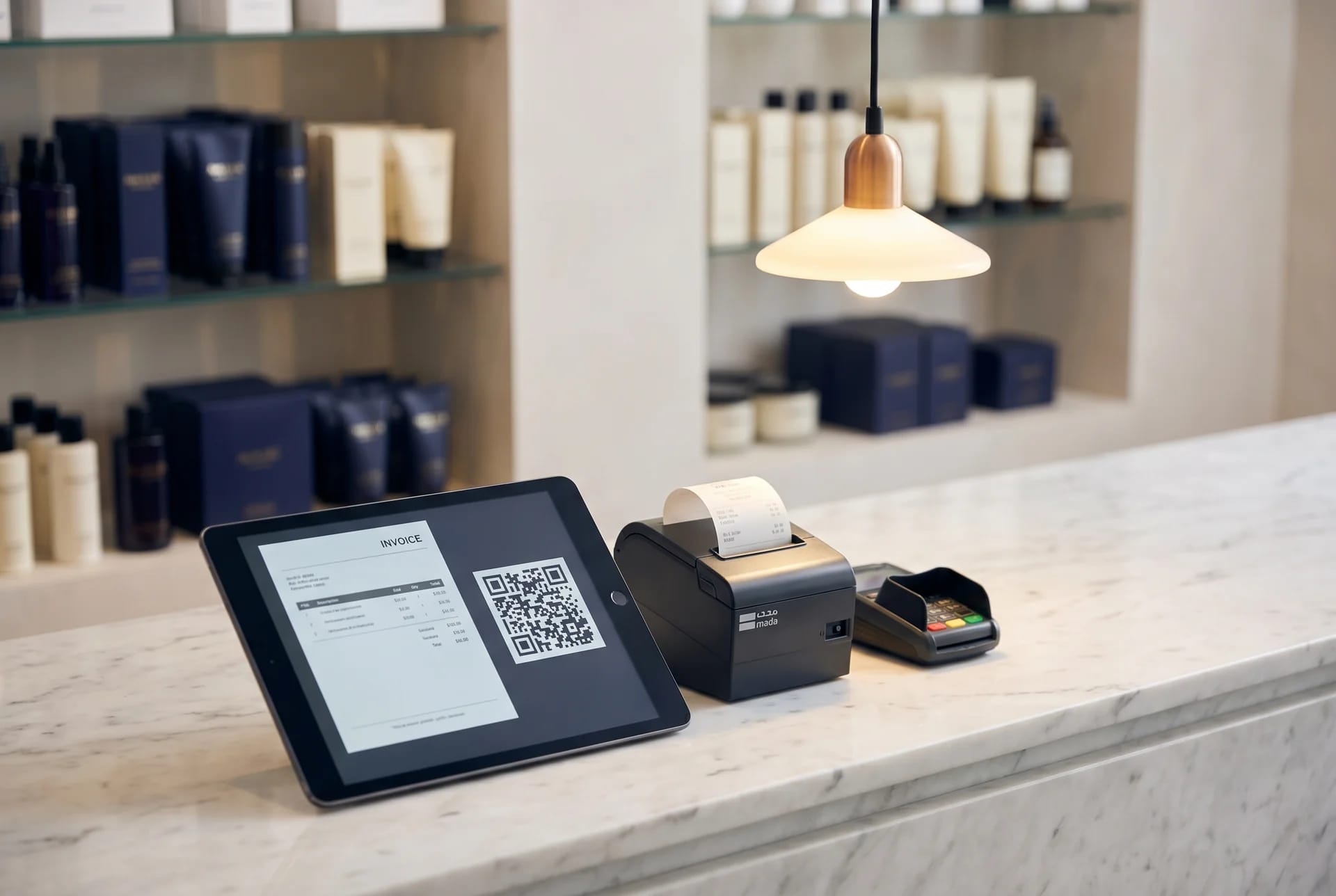
| Vendor | Annual subscription | Onboarding / setup | Net year 1 after reimbursement | Hidden cost to probe |
|---|---|---|---|---|
| Wafeq Plus (5 users) | SAR 1,428 | SAR 0–1,500 | ~SAR 0 after SAR 2,500 reimbursement | Premium tier (SAR 199/mo) unlocks unlimited users — often cheaper than 5-user Plus over time. |
| Zoho Books Professional (5 users) | SAR 1,080 | SAR 0–3,000 (partner-led) | ~SAR 0 after reimbursement | Extra users SAR 8/mo each. Zoho Payroll sold separately. Partner quality varies widely. |
| Qoyod Pro (5 users) | SAR 1,800 | SAR 0–2,000 | ~SAR 0 after reimbursement | HRMS and project modules priced separately. Strong native Salla integration if you need it. |
| Mezan Starter | SAR 763 (year 1) | Included | Fully reimbursed | Renewal rises to SAR 1,090. Budget for upgrade path to Business tier (SAR 1,750) by year 2. |
| Rewaa Basic | SAR 3,449 (less Mezaya discount) | SAR 1,000–4,000 typical | SAR ~1,200 after Mezaya + ZATCA | POS hardware extra. Check receipt printer compatibility before committing. |
| Odoo Enterprise (5 users) | SAR 3,240–5,760 | SAR 18,000–45,000 | SAR ~19,000–46,500 | The subscription is not where the money goes — the partner services are. |
Five hidden costs we have seen trip up Saudi SMEs across multiple implementations: onboarding and data migration fees, per-invoice surcharges from middleware providers, separate VAT return submission add-ons, additional user or branch fees, and — the subtlest — the 15% VAT on the software subscription itself, which most vendor pages quote ex-VAT.
9 Implementation Pitfalls That Will Cost You
We have spoken to accountants, POS integrators and SaaS founders who have watched Phase 2 go live across dozens of Saudi businesses. These are the nine failure modes that keep showing up — not exotic edge cases, but predictable mistakes worth naming before you sign a contract.

The KSA-9 sequence error cascade
One invoice that fails submission desynchronises your local previous-invoice-hash from ZATCA's record. Every subsequent invoice rejects with a KSA-9 error until the chain is reconciled. Happens with in-house builds and with poorly written middleware alike. Ask your vendor how they recover from a single failure — if the answer is vague, walk.
CSID and token expiration mid-shift
Cryptographic Stamp IDs expire. Cashier machine clocks drift. TLS certificates rotate. Vendors that don't auto-renew CSIDs or handle clock skew cause mid-shift outages, which in retail means abandoned baskets. Specifically test a multi-day offline simulation in the sandbox before signing.
Production versus sandbox confusion
Partners occasionally push test invoices to the live FATOORA endpoint. The business becomes legally liable for VAT on phantom transactions — and unwinding them is painful. Insist on documented sandbox-to-production promotion gates before go-live.
Credit-note spirals from duplicate advance postings
Phase 2 invoices cannot be edited or deleted after clearance. A duplicate advance-payment posting can only be unwound through a cascade of credit and debit notes. Force your implementation team to walk you through the edge cases for advance payments and partial deliveries — those are where the rework lives.
"Plug-and-play" generic SaaS with no KSA layer
Offshore SaaS without a KSA localisation layer — generic QuickBooks, generic Xero — can generate English-only invoices that fail ZATCA field validation: missing Arabic seller name, wrong VAT rounding mode, missing buyer VAT number for B2B. The tool may be ZATCA-capable in theory and ZATCA-broken in practice.
Messy master data
Customer records without VAT numbers, malformed addresses, items without the correct tax classification — any of these cause instant rejection. Data cleansing is almost always the longest part of an implementation. Budget it as real work, not a footnote.
The silent cash-flow stall
A B2B invoice that fails clearance cannot legally be sent to the buyer. Receivables stall. Your aging report is still clean — the invoices aren't even out yet. Three accountants told us about 30–45% spikes in days-sales-outstanding in the month after a botched integration.
B2B vs B2C misclassification at the POS
Cashiers ring up a business customer as a simplified invoice; without a VAT number the buyer can't reclaim input VAT — and calls the finance team weeks later. Look for software that forces B2B/B2C branching at the terminal (Rewaa, Foodics, Zoho do this) rather than leaving it to the operator.
No internal owner, no recovery plan
Most Saudi SMEs have no in-house developer. When ZATCA returns a JSON error payload at 9pm, the vendor's Arabic hotline is the only thing standing between you and a two-week outage. Confirm that support is in Arabic, during KSA hours, before you sign.
ZATCA Reimbursement and the Monsha'at Mezaya Stack
The final lever most SMEs miss is the financial support layer. ZATCA reimburses up to SAR 2,500 per establishment for approved e-invoicing software, and the Monsha'at Mezaya programme layers separate discounts on top. Used together, a Phase 2 SaaS rollout can be close to free in year one.
1. Pick an approved vendor
Only vendors listed on the ZATCA Solution Providers Directory qualify for the SAR 2,500 reimbursement. Wafeq, Zoho Books KSA, Qoyod, Daftra, Mezan and Rewaa all appear or publish documented compliance. Double-check before purchase.
2. Keep your invoices as proof
ZATCA requires the tax invoice for the software purchase, plus evidence of the establishment (commercial registration). Vendors handle this well if you ask — Mezan's onboarding flow actually volunteers the paperwork.
3. Stack the Monsha'at Mezaya discount
Monsha'at's Mezaya (مزايا) programme provides additional discounts of up to 63% on qualifying products, including Rewaa. Eligibility depends on SME classification and sector. Apply via monshaat.gov.sa and ask the vendor for their Mezaya enrolment code.
4. File the reimbursement request
Submit the reimbursement request through the ZATCA portal within the stated window (typically one year from purchase). Approved reimbursements pay out by bank transfer — historically within 4–8 weeks for clean submissions.
Done right, a well-chosen Phase 2 software stack costs less in year one than missing the Wave 24 deadline by a single month. Do not leave the SAR 2,500 on the table.
Best-For Picks and Our Final Verdict
After scoring all seven platforms against the ten criteria, the rankings are closer than the marketing would suggest. Rather than declaring one king, here is how we would actually recommend them in the wild, by business type.

Services, agencies, consultancies
Wafeq. The bilingual UX, unlimited-user Premium tier and clean VAT automation pay back quickly once billable hours are on the line.
Export-oriented startups & multi-GCC SMEs
Zoho Books KSA. Lowest sticker price, mature multi-currency, and the Zoho One ecosystem pulls its weight.
Project services, O&M, contractors
Qoyod. Project cost tracking and Saudi GL depth beat Wafeq's polish when the KPI is cost per WBS line.
Apparel, electronics, cosmetics retail
Rewaa for the POS layer, paired with Wafeq or Zoho for accounting. Rewaa's offline buffer is worth the premium for any multi-branch retailer.
Micro SMEs under SAR 3M revenue
Mezan. Cheapest compliant option, fully reimbursable in year one, and the compliance layer is solid.
One-tool-replaces-three shops
Daftra. Not the deepest accounting, not the best CRM, but the best unified answer for businesses that are tired of three subscriptions.
Growth-stage SMEs outgrowing SaaS
Odoo Enterprise with a vetted KSA partner. Only once you genuinely need ERP depth — manufacturing routing, multi-company consolidation, advanced warehousing.
A caveat worth repeating: the ZATCA Solution Providers Directory is the only authoritative list. Any vendor — on this shortlist or not — should appear there before you sign.
Frequently Asked Questions
01Do I need ZATCA Phase 2 software if my turnover is under SAR 375,000?
Not yet — you are outside the current waves. However, ZATCA has publicly committed to lowering the threshold until every VAT-registered business is covered. If you are VAT-registered at all, budget for a 2027 transition. The SAR 2,500 reimbursement is available now and will likely tighten as more SMEs qualify.
02Can I just use a generic QuickBooks or Xero account?
Not out of the box. Generic international SaaS without a KSA localisation layer will generate invoices that fail ZATCA validation — missing Arabic seller name, wrong VAT rounding, missing buyer VAT number for B2B. Either use a KSA edition (Zoho Books KSA, Odoo with l10n_sa_edi) or pair the generic tool with a Phase 2 middleware layer.
03What happens if an invoice fails clearance mid-sale?
For B2B: you cannot legally send the invoice to the buyer until the clearance goes through. Cash-flow stalls until resolved. For B2C (simplified): you may still complete the sale, but you have 24 hours to report the invoice. Any software worth buying must queue and retry both paths without breaking the hash chain.
04How long does implementation typically take for a Saudi SME?
For cloud SaaS (Wafeq, Zoho, Qoyod, Mezan): 1–3 weeks, most of which is data migration. For Odoo Enterprise: 6–16 weeks, depending on modules. The single biggest time sink is cleaning up customer and product master data — budget for it honestly.
05Is Arabic invoicing legally required, or just recommended?
Required. Saudi commercial regulation treats Arabic as the authoritative commercial language. Tax invoices must include the seller's Arabic name, and B2B buyers are entitled to receive the invoice in Arabic. Bilingual invoices (Arabic + English) are the safe default — English-only will fail.
06Can one platform handle both my POS and my accounting?
Sometimes. Rewaa does it well for retail. Foodics does it well for F&B. For services businesses, accounting tools without POS (Wafeq, Zoho, Qoyod) are a better fit. Trying to force a pure POS to act as a general ledger almost always ends in a migration to a proper accounting tool 18 months later.
07Do I need to host my data in Saudi Arabia?
Not for most SMEs. The Personal Data Protection Law (PDPL) allows cross-border transfers with the right contractual terms, and offshore cloud is legal for non-regulated sectors. Licensed fintechs, insurers and SAMA-regulated entities effectively need in-Kingdom hosting — the major providers (AWS ME-Central, Google Cloud Dammam, Microsoft Azure KSA) have KSA regions.
08What's the minimum viable setup to get ZATCA-compliant by June 30, 2026?
Buy a directory-listed Phase 2 solution (Mezan Starter is the cheapest credible route), complete the FATOORA portal onboarding for your CSID, migrate your last three months of transactions, validate in sandbox for at least one full week, then flip production. A disciplined SME can do this in 14 days. Leave less than 30 days before the deadline and you are gambling.
 Our Verdict
Our Verdict: Which VAT Compliance Software Should You Choose?
After scoring seven platforms against ten weighted criteria — native Fatoora integration, Arabic UX, pricing, ecosystem fit, offline resilience, support — here are the picks that actually earn their place in a Saudi SME's 2026 stack.
The cleanest bilingual UX in the Saudi market, native Fatoora Phase 2 integration, and unlimited users on the Premium tier. Effectively free in year one after the SAR 2,500 ZATCA reimbursement. The no-compromise pick for agencies, consultancies, and professional services firms.
Best-in-class 300-receipt offline buffer, native stock sync across physical and online channels, and automatic ZATCA reporting on reconnect. Monsha'at Mezaya discounts stack up to 63% off. Pair it with Wafeq for the accounting side.
Lowest sticker price at SAR 60 per month, mature multi-currency, and the Zoho One ecosystem pulls its weight as you grow. Arabic UI is partial, but the polish and integration breadth are hard to beat for anything export-oriented.
Native l10n_sa_edi for Phase 2 plus the full ERP depth — manufacturing routing, multi-company consolidation, advanced warehousing. Implementation is not cheap (SAR 18k–150k), but nothing else scales this well for multi-entity groups with a vetted KSA partner.
The single most important move for any Saudi SME right now is not which tool you pick — it is picking one and validating it in sandbox before Wave 24's June 30 deadline. A clean Mezan rollout will serve you better than a late, botched Odoo implementation. Pick something on the ZATCA directory, claim the SAR 2,500 reimbursement, and move.
Our Pick: Wafeq for Saudi SME Phase 2 Compliance
4.5/5 — the best bilingual SME accounting tool for ZATCA Phase 2 in 2026. Free trial, no credit card required.
Try Wafeq Free